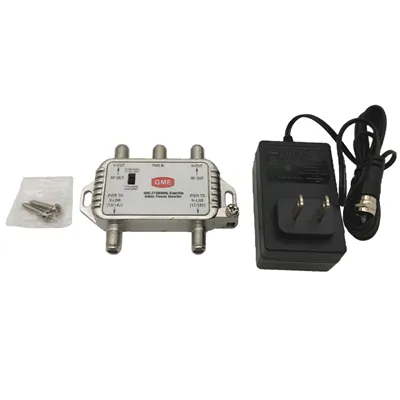
In the rapidly evolving landscape of surveillance camera networks, the choice of equipment is crucial for ensuring optimal performance and reliability. One key component in these networks is the Optical Network Terminal (ONT). The question that often arises is whether a 1GE ONT can be effectively used in a surveillance camera network. As a 1GE ONT supplier, I am well - positioned to provide an in - depth analysis of this topic.


Understanding the Basics of 1GE ONT
A 1GE ONT, also known as a Gigabit Ethernet Optical Network Terminal, is a device that connects the optical fiber network to the local area network (LAN) using Gigabit Ethernet technology. It provides a high - speed data connection with a maximum bandwidth of 1 Gigabit per second (Gbps). This technology has been widely adopted in various applications due to its balance between cost and performance.
Requirements of a Surveillance Camera Network
Surveillance camera networks have specific requirements that need to be met for efficient operation. These requirements mainly include bandwidth, latency, and reliability.
Bandwidth
The bandwidth requirement of a surveillance camera network depends on several factors, such as the number of cameras, the resolution of the cameras, and the frame rate. For example, a standard - definition (SD) camera may require around 1 - 2 Mbps of bandwidth, while a high - definition (HD) camera can consume 4 - 8 Mbps, and a 4K camera may need 15 - 25 Mbps or even more.
If you have a small - scale surveillance camera network with a limited number of SD cameras, a 1GE ONT may be sufficient to handle the data traffic. For instance, if you have 20 SD cameras, each requiring 1.5 Mbps, the total bandwidth needed is 20 * 1.5 = 30 Mbps, which is well within the capacity of a 1GE ONT.
However, in a large - scale surveillance system with multiple HD or 4K cameras, the bandwidth demand can quickly exceed the 1Gbps limit of a 1GE ONT. For example, if you have 100 HD cameras, each consuming 6 Mbps, the total bandwidth required is 100 * 6 = 600 Mbps. While this may still seem within the 1Gbps capacity at first glance, it does not account for other network overhead and potential future expansion.
Latency
Latency is another critical factor in surveillance camera networks. Low latency is essential for real - time monitoring and response. A high - latency network can cause delays in video transmission, which may result in missed events. 1GE ONTs generally offer relatively low latency, which is suitable for most surveillance applications. However, in some high - security applications where split - second response is required, even the small latency of a 1GE ONT may need to be further optimized.
Reliability
Surveillance camera networks need to operate continuously without interruption. The reliability of the ONT is crucial in ensuring this. 1GE ONTs are designed with high - quality components and advanced error - correction mechanisms to provide reliable data transmission. They also support features such as link aggregation and redundancy, which can enhance the overall reliability of the network.
Advantages of Using a 1GE ONT in a Surveillance Camera Network
Cost - effectiveness
One of the most significant advantages of using a 1GE ONT in a surveillance camera network is its cost - effectiveness. Compared to higher - speed ONTs, 1GE ONTs are generally more affordable. This makes them an attractive option for small and medium - sized businesses or projects with budget constraints.
Compatibility
1GE ONTs are widely compatible with a variety of network devices and surveillance cameras. Most surveillance cameras on the market support Gigabit Ethernet connections, which means that a 1GE ONT can be easily integrated into an existing or new surveillance camera network.
Limitations of Using a 1GE ONT in a Surveillance Camera Network
Bandwidth Limitations
As mentioned earlier, the 1Gbps bandwidth limit of a 1GE ONT may not be sufficient for large - scale surveillance camera networks with high - resolution cameras. In such cases, upgrading to a higher - speed ONT, such as a XPON 4GE VOIP, may be necessary.
Future Expansion
If you plan to expand your surveillance camera network in the future, a 1GE ONT may not be the best choice. As the number of cameras and the demand for higher - resolution video increase, the 1Gbps bandwidth may quickly become a bottleneck.
Suitable Scenarios for Using a 1GE ONT
Small - scale Surveillance
For small - scale surveillance applications, such as home security systems or small retail stores, a 1GE ONT is often a perfect fit. These scenarios typically involve a limited number of SD or HD cameras, which do not generate a large amount of data traffic.
Low - cost Solutions
If cost is a major concern, a 1GE ONT can provide an affordable solution without sacrificing too much performance. Small businesses or organizations with limited budgets can benefit from the cost - effectiveness of 1GE ONTs.
Recommended 1GE ONT Products
As a 1GE ONT supplier, I offer a range of high - quality 1GE ONT products. For example, our XPON ONU 1GE 3FE VOIP and XPON ONU 1GE 1FE VOIP are designed to meet the diverse needs of surveillance camera networks. These products not only provide reliable Gigabit Ethernet connectivity but also support Voice over Internet Protocol (VOIP), which can be an added advantage in some applications.
Conclusion
In conclusion, a 1GE ONT can be used in a surveillance camera network, especially in small - scale and cost - sensitive scenarios. It offers a good balance between cost and performance, with relatively low latency and high reliability. However, for large - scale networks with high - resolution cameras or those with future expansion plans, a higher - speed ONT may be required.
If you are considering using a 1GE ONT in your surveillance camera network or need more information about our products, please feel free to contact us for procurement discussions. We are committed to providing you with the best solutions tailored to your specific needs.
References
- Cisco Systems. "Surveillance Camera Network Design Best Practices."
- Juniper Networks. "Bandwidth Requirements for Surveillance Camera Systems."
- IEEE Standards Association. "Ethernet Standards and Their Applications in Surveillance Networks."