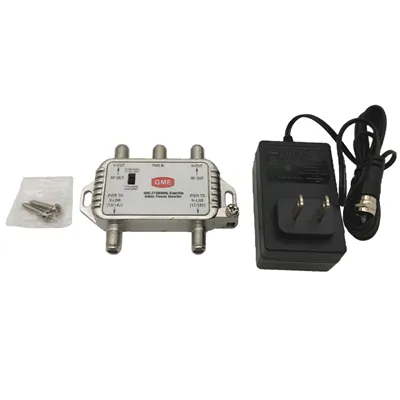
As a supplier of IPQAM modulators, I often encounter questions from customers about the capabilities of our products. One of the most frequently asked questions is whether an IPQAM modulator can support digital audio and video simultaneously. In this blog post, I will delve into this topic, exploring the technical aspects and practical applications of IPQAM modulators in handling both digital audio and video.
Understanding IPQAM Modulators
Before we discuss the simultaneous support of digital audio and video, let's first understand what an IPQAM (IP Quadrature Amplitude Modulator) modulator is. An IPQAM modulator is a device that converts IP-based digital content into a QAM (Quadrature Amplitude Modulation) signal, which can be transmitted over traditional cable television networks. This technology allows broadcasters and service providers to deliver a wide range of digital services, including high-definition television (HDTV), video-on-demand (VOD), and interactive television (ITV), to their subscribers.
The key function of an IPQAM modulator is to encapsulate IP packets containing audio and video data into MPEG-2 transport streams, which are then modulated onto a QAM carrier. This process enables the efficient transmission of multiple digital channels over a single cable frequency, maximizing the use of available bandwidth.
Simultaneous Support of Digital Audio and Video
The short answer to the question "Can an IPQAM modulator support digital audio and video simultaneously?" is yes. IPQAM modulators are designed to handle both audio and video data streams, allowing for the seamless delivery of multimedia content. Here's how it works:

Encoding and Multiplexing
When digital audio and video content is fed into an IPQAM modulator, the first step is to encode the data using appropriate codecs. For video, popular codecs include MPEG-2, H.264 (AVC), and H.265 (HEVC), while for audio, common codecs are MPEG-1 Layer II, Dolby Digital (AC-3), and DTS. These codecs compress the audio and video data to reduce bandwidth requirements without significant loss of quality.
Once the audio and video data are encoded, they are multiplexed together into a single MPEG-2 transport stream. This process interleaves the audio and video packets, ensuring that they are transmitted in a synchronized manner. The multiplexed stream is then encapsulated into IP packets and sent to the IPQAM modulator.

Modulation and Transmission
The IPQAM modulator receives the IP packets containing the multiplexed audio and video data and performs the necessary modulation to convert them into a QAM signal. The QAM signal is then transmitted over the cable network to the end-users' set-top boxes or televisions.
At the receiving end, the set-top box or television demodulates the QAM signal, extracts the IP packets, and decodes the audio and video data using the appropriate codecs. This allows the end-users to enjoy high-quality digital audio and video content simultaneously.
Practical Applications
The ability of IPQAM modulators to support digital audio and video simultaneously has numerous practical applications in the broadcasting and telecommunications industries. Here are some examples:
Cable Television
Cable television providers use IPQAM modulators to deliver a wide range of digital channels to their subscribers. These channels can include high-definition television (HDTV), standard-definition television (SDTV), video-on-demand (VOD), and pay-per-view (PPV) content. By using IPQAM modulators, cable providers can efficiently utilize their existing cable infrastructure to deliver multiple channels over a single frequency, reducing costs and improving the overall viewing experience for their subscribers.
IPTV (Internet Protocol Television)
IPTV is a technology that allows television content to be delivered over the Internet instead of traditional cable or satellite networks. IPQAM modulators play a crucial role in IPTV systems by converting IP-based video and audio streams into a format that can be transmitted over the Internet. This enables IPTV service providers to offer a wide range of channels and services to their subscribers, including live television, VOD, and catch-up TV.
Video Surveillance
In video surveillance systems, IPQAM modulators can be used to transmit audio and video data from multiple cameras over a single network. This allows for the centralized monitoring and management of surveillance footage, improving the efficiency and effectiveness of security operations.

Our Product Offerings
As a leading supplier of IPQAM modulators, we offer a wide range of products that are designed to meet the diverse needs of our customers. Our products are known for their high performance, reliability, and flexibility, and they are used in a variety of applications, including cable television, IPTV, and video surveillance.
Here are some of our popular products:
- 4 Channels IP Encoder with RCA Input: This product allows you to encode up to four channels of audio and video data simultaneously, providing a cost-effective solution for small to medium-sized broadcasting and surveillance applications.
- 2 IP HD Streams Over A Single QAM: With this product, you can transmit two high-definition IP streams over a single QAM carrier, maximizing the use of available bandwidth and reducing the cost of transmission.
- 1 Channel HDMI To IP Streamer with RCA Input: This product enables you to convert a single HDMI or RCA input into an IP stream, allowing you to easily integrate your existing audio and video sources into an IP-based network.
Conclusion
In conclusion, IPQAM modulators are capable of supporting digital audio and video simultaneously, making them an essential component in modern broadcasting and telecommunications systems. Whether you are a cable television provider, an IPTV service provider, or a video surveillance operator, our IPQAM modulators can help you deliver high-quality multimedia content to your customers in a cost-effective and efficient manner.

If you are interested in learning more about our IPQAM modulators or have any questions about our products, please do not hesitate to contact us. We would be happy to discuss your specific requirements and provide you with a customized solution that meets your needs.
References
- "Digital Television: Technology and Applications" by Andrew J. Maltz.
- "IPTV: Technology, Standards, and Applications" by Syed Ali Raza.
- "Video Surveillance Handbook" by Daniel J. Bogner.