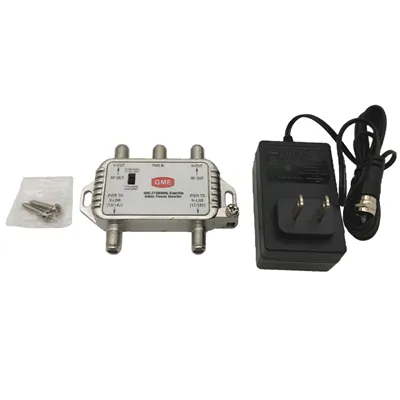
Hey there! As a supplier in the CATV (Cable Television) industry, I've been dealing with all sorts of components that make our systems tick. One of the unsung heroes in this field is the multiplexer. Today, I'm gonna break down what multiplexers do in CATV and why they're so important.
First off, let's get a basic understanding of what a multiplexer is. In simple terms, a multiplexer is a device that combines multiple input signals into a single output signal. It's like a traffic cop for electrical signals, deciding which ones get to go through and when. In the context of CATV, this is super crucial because cable systems have to handle a ton of different channels and data streams all at once.
One of the main roles of multiplexers in CATV is to increase the efficiency of the cable network. You see, cable lines have a limited amount of bandwidth. That's the amount of data that can be transmitted over the cable at any given time. By using multiplexers, we can squeeze more channels and data onto the same cable. For example, instead of having a separate cable for each TV channel, we can combine multiple channels into one signal using a multiplexer and send them all down a single cable. This not only saves on the cost of laying more cables but also makes the network more manageable.
Another important function of multiplexers is signal routing. In a CATV system, there are different types of signals, such as video, audio, and data. Multiplexers can separate these signals based on their frequency or other characteristics and send them to the appropriate destinations. For instance, when you tune in to a particular channel on your TV, the multiplexer ensures that the correct video and audio signals for that channel are sent to your set - top box.
Multiplexers also play a key role in signal quality. They can help reduce interference between different signals. When multiple signals are transmitted on the same cable, there's a risk of them interfering with each other, which can lead to a poor viewing experience. Multiplexers use techniques like frequency division multiplexing (FDM) or time division multiplexing (TDM) to keep the signals separate and prevent interference. FDM divides the available frequency spectrum into different bands, with each band dedicated to a specific signal. TDM, on the other hand, allocates specific time slots for each signal to be transmitted.
Now, let's talk about how multiplexers fit into the bigger picture of our CATV systems. At the head - end of the cable network, which is where all the programming and data come in, multiplexers are used to combine different channels and data streams from various sources. These sources can include satellite feeds, local TV stations, and on - demand content providers. Once the signals are combined, they're sent down the main cable trunk to distribution points.


At the distribution points, the multiplexed signals are then split and sent to different neighborhoods and individual homes. Here, another set of multiplexers may be used to further manage the signals and ensure that each subscriber gets the channels they've subscribed to.
One thing to note is that multiplexers work in conjunction with other components in the CATV system. For example, amplifiers are often used to boost the signal strength as it travels through the cable network. A Multi Media Drop Amplifier can be used at the drop level, which is the connection between the distribution point and the subscriber's home. This helps to ensure that the signal remains strong enough to provide a clear picture and good sound quality.
In addition to these technical functions, multiplexers also have an impact on the business side of CATV. They allow us, as suppliers, to offer more channels and services to our customers without having to make massive infrastructure investments. This means we can be more competitive in the market and attract more subscribers.
From a customer's perspective, multiplexers enable a wider range of viewing options. You can choose from hundreds of channels, including high - definition and 4K content, all delivered over a single cable. And with the ability to integrate data services like internet and phone, multiplexers make it possible for households to have a one - stop - shop for their entertainment and communication needs.
However, like any technology, multiplexers aren't without their challenges. One of the main issues is the complexity of managing multiple signals. As the number of channels and data streams increases, the multiplexer has to work harder to ensure that there's no interference and that all signals are routed correctly. This requires advanced algorithms and high - performance hardware.
Another challenge is keeping up with the ever - changing technology. As consumers demand higher - quality video and more interactive services, the CATV industry has to constantly upgrade its systems. Multiplexers need to be able to adapt to new standards and protocols, such as those for streaming high - definition and 4K content.
Despite these challenges, the role of multiplexers in CATV is only going to become more important in the future. With the growth of smart TVs, streaming services, and the Internet of Things (IoT), the demand for more bandwidth and more efficient signal management will continue to rise.
If you're in the market for a reliable CATV system that makes the most of multiplexer technology, we'd love to have a chat with you. Whether you're a small - scale operator looking to upgrade your network or a large - scale provider aiming to expand your services, we have the expertise and the products to meet your needs. Get in touch with us to start a discussion about how we can work together to create a top - notch CATV solution for you.
References
- "Cable Television Technology Handbook"
- Industry whitepapers on CATV signal management