

In operator equipment rooms, rows of OLT device indicator lights flash rhythmically, while inside the weak-current cabinets of homes and businesses twenty kilometers away, a device that integrates fiber optic conversion, routing and switching, wireless coverage, voice transmission, and television signal distribution works silently, breaking down gigabit bandwidth into the network services needed by every member of the household.
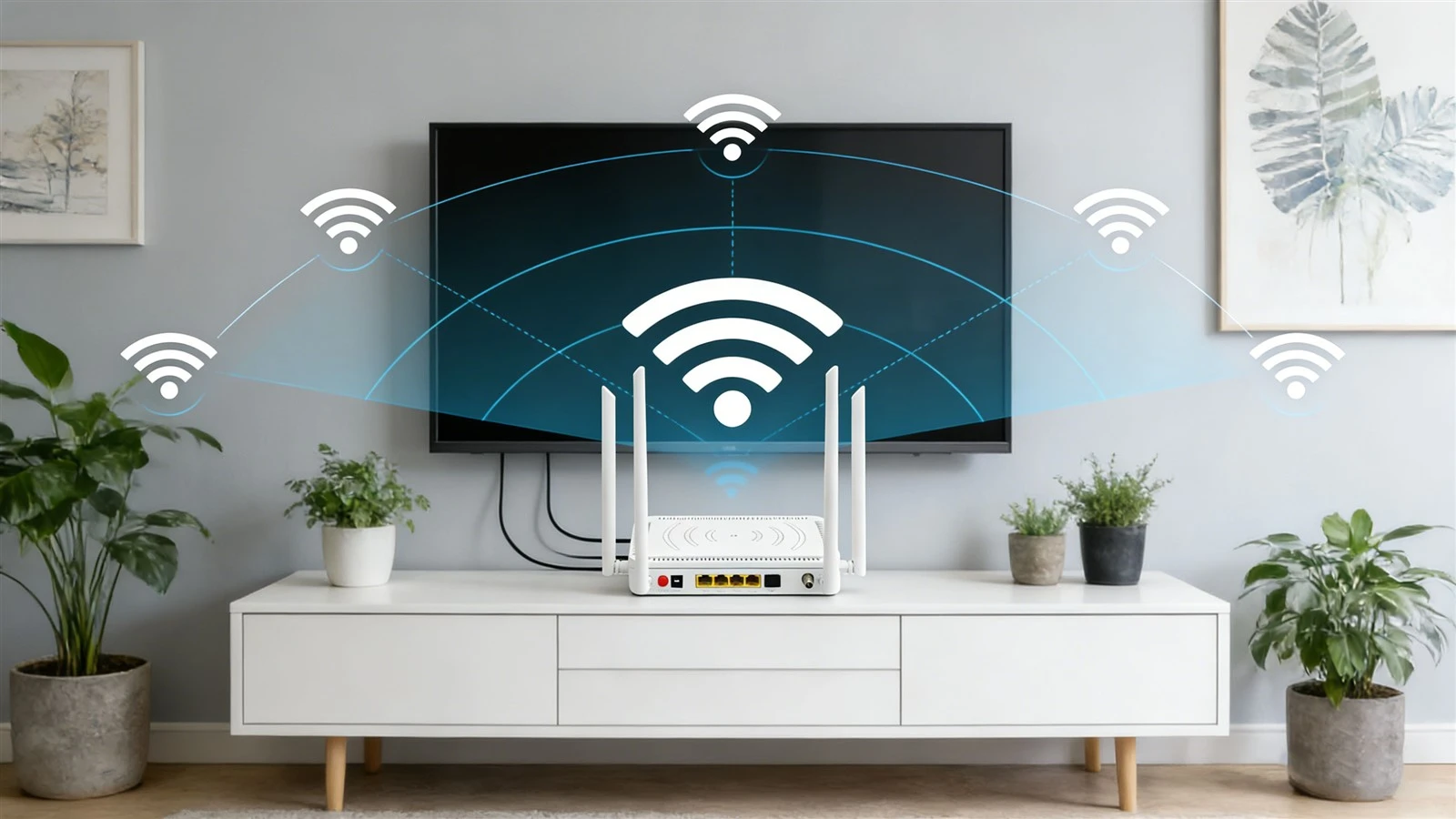
Engineer Li, a technical supervisor at a broadband operator in Shenzhen, handles dozens of such devices every week. Pointing to a white rectangular device, he says:
"Today's optical modem is completely different from what it was five years ago. Before, it was just a simple 'optical-to-electrical' conversion box. Now, look at this one-fiber optic input, simultaneously outputting gigabit wired connections, wireless Wi-Fi, high-definition television, and two telephone lines. One device solves all access problems."
01 Technical Fusion: The Core Composition of Modern XPON ONU
Fiber optic access networks are undergoing a profound transformation from single-function to multi-service integration. In the early days of Fiber-to-the-Home (FTTH) deployment, users often faced a series of devices: optical modems, routers, telephone gateways, and television signal converters.
These devices not only occupied space but also increased installation complexity and potential points of failure. The emergence of multifunction XPON ONU addresses this pain point.
XPON is a collective term for GPON and EPON. GPON, based on the ITU-T G.984 series of standards, provides asymmetric transmission capabilities of 2.5 Gbps downstream and 1.25 Gbps upstream, supporting a splitting ratio of up to 1:128 and a coverage radius of 20 kilometers.
This technology provides a sufficient bandwidth foundation for multifunction ONUs, enabling them to simultaneously carry various services such as high-speed internet, high-definition video, and voice communication.
Integrated ONUs, equipped with 4 Gigabit Ethernet ports, 2 traditional telephone interfaces, CATV RF output, and WiFi5 wireless functionality, have become the preferred terminal form for operators promoting "triple-play" services.
02 Complete Overview of Device Specifications: The Hardware Blueprint of Multifunction XPON ONU
To understand how such a multifunction device works, it is first necessary to dissect its hardware architecture and interface configuration. A typical 4GE CATV POTS WiFi5 ONU adopts a highly integrated chipset solution, accommodating multiple functional modules within a compact chassis.
The back panel of the device typically includes the following key interfaces: one SC/APC fiber optic input port utilizing Wavelength Division Multiplexing (WDM) technology; four 10/100/1000M auto-sensing Ethernet ports; two RJ11 telephone interfaces; one CATV RF output port (F-type connector).
From an internal architecture perspective, the core of the device is the main control chip, responsible for protocol conversion, packet processing, and system management. The GPON module handles optical-to-electrical conversion and protocol processing, adhering to the ITU-T G.984.x standards.
The four Gigabit Ethernet ports are connected via a switch chip, supporting Layer 2 functions such as VLAN partitioning, port isolation, and traffic control. The voice module provides POTS interfaces, supporting SIP or MGCP protocols to convert IP voice signals into analog telephone signals.
The CATV module receives television signals at a 1550nm wavelength through an independent photodetector, which are then amplified and filtered before outputting as RF signals. The WiFi5 module, based on the 802.11ac standard, provides wireless coverage in the 5GHz frequency band.
These modules work in coordination to achieve a highly integrated design of single-fiber input and multi-service output.
03 The Art of Bandwidth Allocation: The Intelligent Carrying Mechanism for Four Types of Services
The biggest challenge for multifunction ONUs is how to reasonably allocate limited uplink bandwidth to ensure the quality of service for various types of traffic. This is where Dynamic Bandwidth Allocation (DBA) technology comes into play.
In GPON systems, the downstream direction uses a broadcast method, where data sent by the OLT is received by all ONUs, but only the ONU matching the LLID processes it. The upstream direction uses Time Division Multiple Access (TDMA), with each ONU transmitting data in a designated time window.
Multifunction ONUs ensure service quality for critical traffic through traffic flow classification and priority tagging. The device typically categorizes traffic into several fixed priority levels: voice traffic enjoys the highest priority, followed by CATV video streams, then internet data, and finally management signaling.
Specifically regarding bandwidth allocation, even when the total uplink bandwidth is fully utilized, the system reserves at least 64Kbps of dedicated channel for voice traffic, ensuring that calls are not affected by data downloads. Video traffic is optimized through multicast technology and IGMP Snooping to avoid multiple copies of the same content occupying uplink bandwidth.
The WiFi5 wireless module, as an extension of the wired network, also follows priority principles in its internal scheduling. The MU-MIMO technology of the 802.11ac standard allows the ONU to transmit data to multiple wireless clients simultaneously, improving the utilization of wireless spectrum.
04 Exploring Application Scenarios: Comprehensive Coverage from Homes to Small and Micro Enterprises
The design of such multifunction ONUs considers a wide range of application scenarios, from ordinary households to small businesses and shops, where they can find their utility.
In a home environment, one device can meet all network needs: after fiber optic access, the four Gigabit Ethernet ports can connect to a smart TV, gaming console, NAS storage, and computer respectively; WiFi5 wireless network covers the entire home, supporting multiple smartphones and tablets for smooth internet access simultaneously; CATV output connects to a TV set-top box for watching high-definition TV channels; the two telephone interfaces can be used for landline telephones and fax machines.
In small business scenarios, the device's wired ports can be extended via switches to connect more office computers and network equipment. VLAN functionality allows businesses to partition network areas for different departments, and port isolation enhances internal network security.
The voice function provides a low-cost internal telephone system for enterprises, while the CATV interface remains practical in places requiring access to financial news or monitoring channels. The WiFi5 wireless network covers the mobile office needs within the office area.
For multi-tenant environments such as hotels and student apartments, operators can centrally configure large numbers of ONUs through the TR-069 remote management platform, enabling batch service activation and fault diagnosis, significantly reducing operational and maintenance costs.
05 Considerations for Technology Selection: The Positioning of WiFi5 in Today's Wireless Environment
As WiFi6 and even WiFi7 gradually become popular, the continued choice of WiFi5 modules in multifunction ONUs is based on practical product positioning and market considerations.
WiFi5, based on the 802.11ac standard, focuses on the 5GHz frequency band, achieving theoretical speeds of up to 3.5 Gbps through 256-QAM modulation and a maximum channel width of 160MHz. For most home application scenarios, this performance is already sufficient.
Compared to WiFi6, the biggest shortcoming of WiFi5 is the lack of OFDMA technology and comprehensive support for both uplink and downlink MU-MIMO, meaning that WiFi5's network efficiency and latency performance are inferior to WiFi6 when multiple devices are connected simultaneously.
Integrating WiFi5 into multifunction ONUs is a cost-performance balance choice. For budget-sensitive large-scale operator procurement, the maturity and cost-effectiveness of WiFi5 modules remain attractive.
In actual deployments, the wireless functionality of such ONUs is often positioned as "basic coverage." If users have higher wireless demands, they can connect more professional WiFi6 or Mesh routers via the Ethernet ports. This layered design controls terminal costs while retaining flexibility for network upgrades.
It is worth noting that some high-end ONUs have begun integrating WiFi6 modules, but at correspondingly higher prices. As WiFi6 chip costs decrease in the future, it is expected that more multifunction ONUs will upgrade their wireless standards.
With the continued popularization of fiber optic access, this multifunction XPON ONU is quietly reshaping the form of operator terminal equipment. In telecommunication operators' warehouses, optical modems of different models are neatly stacked, while integrated devices combining 4GE, CATV, POTS, and WiFi5 are occupying increasingly more space.
These devices are not only the crystallization of technology but also the embodiment of business strategies-operators lock in multiple services for users through a single terminal, while users enjoy the convenience of a one-stop solution.


