

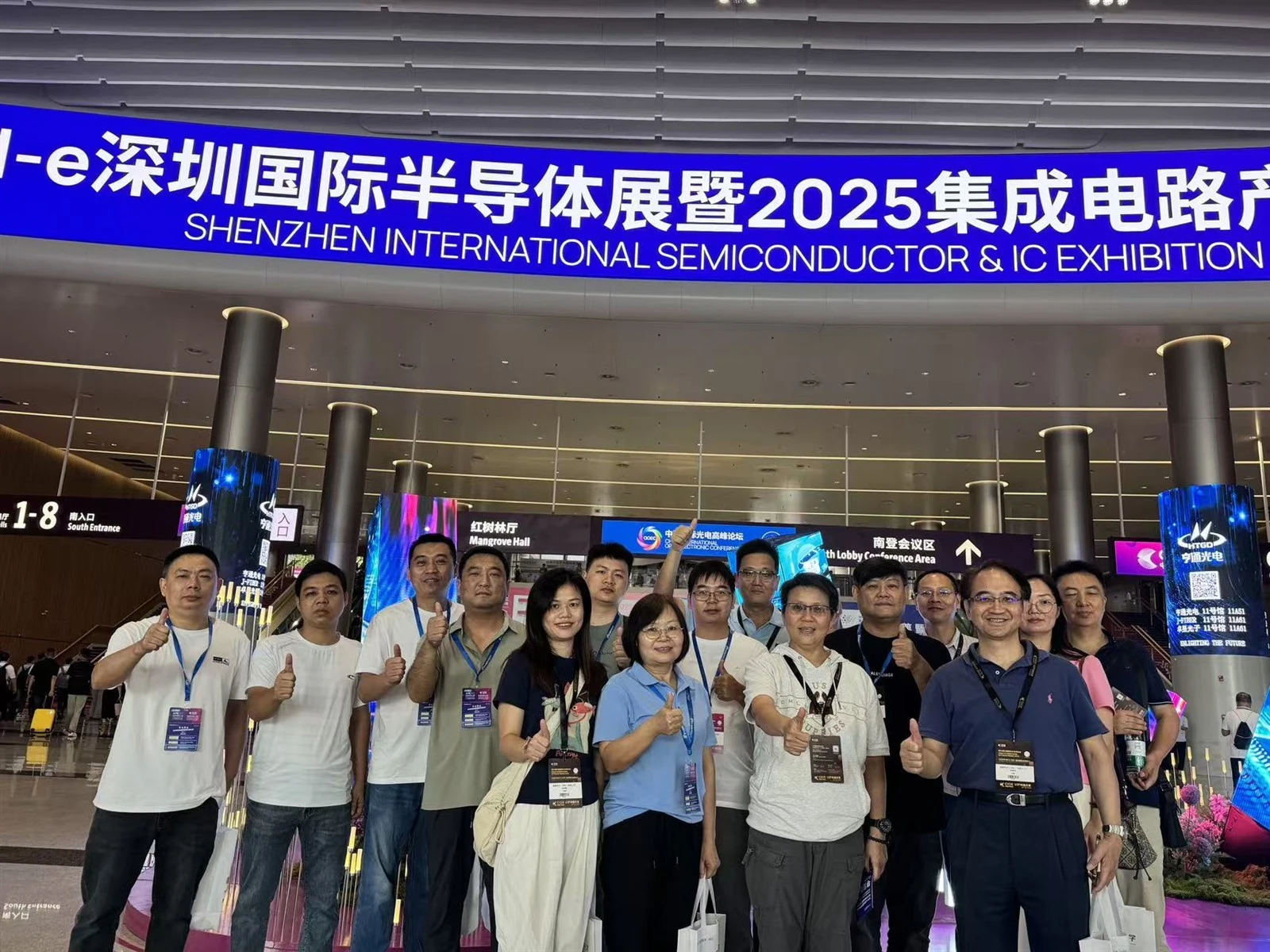
We are honored that Good Mind Electronics (Shenzhen) Co., Ltd. organized a team to participate in the 26th China International Optoelectronic Exposition (CIOE) held in Shenzhen. The exhibition was grand in scale, bringing together leading global enterprises, cutting-edge technologies, and innovative products in the optoelectronic field. It was akin to a grand feast of optoelectronic technology, offering immense benefits and leaving a profound impression on us.
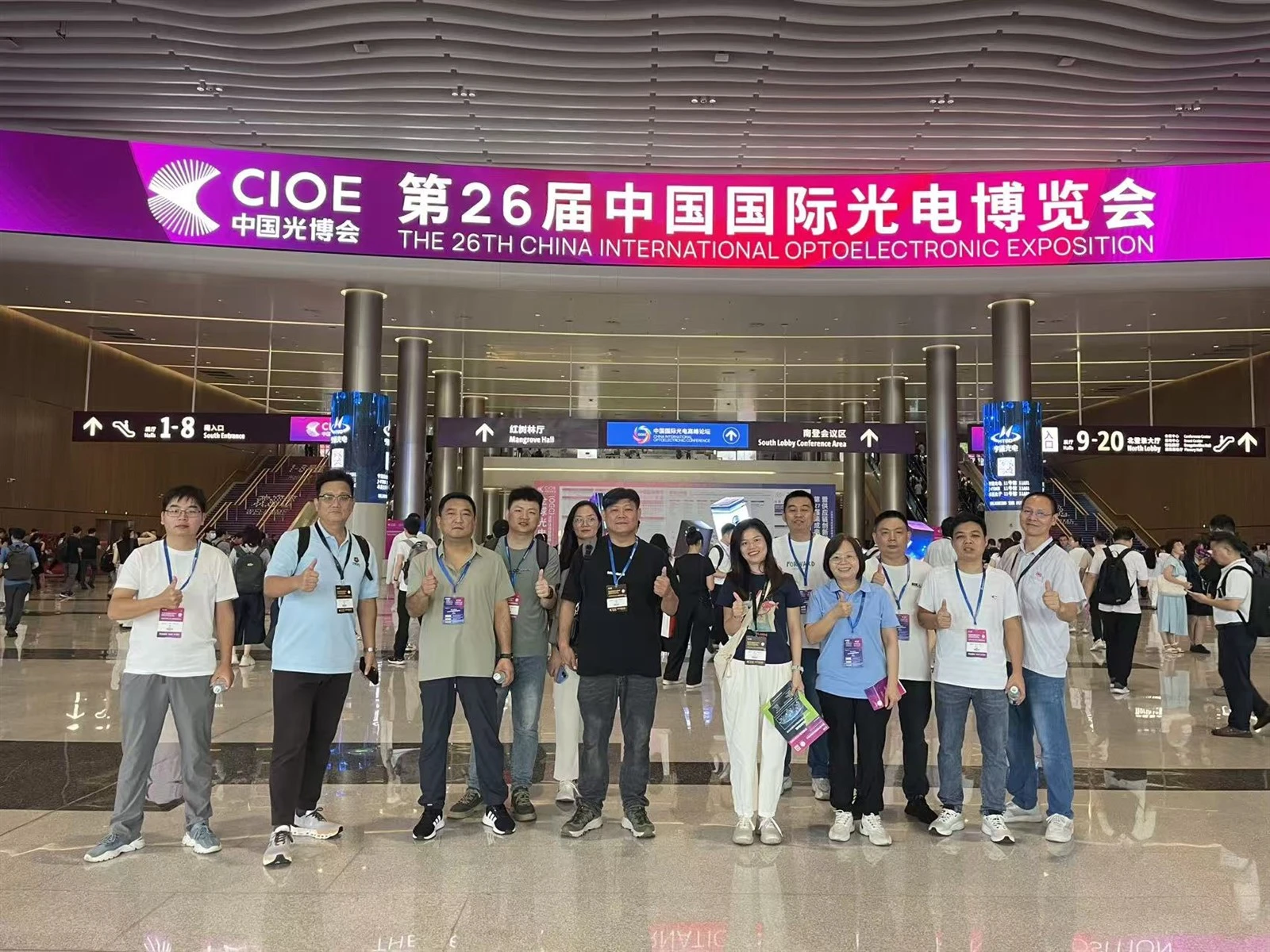
1. Overall Impression of the Exhibition: Unprecedented Scale and Focus on Innovation
This year's CIOE covered numerous fields, including optical communication, lasers, infrared technology, precision optics, and optoelectronic sensing. It comprehensively showcased the latest developments and application trends in optoelectronic technology. The event attracted not only industry giants from around the world but also a multitude of dynamic innovative companies. The entire exhibition hall was filled with enthusiasm for exchange and exploration. It is evident that optoelectronic technology, as the cornerstone of the modern tech industry, continues to exhibit strong innovative vitality, injecting new momentum into various sectors such as communications, manufacturing, healthcare, consumer electronics, and autonomous driving.
2. Key Technical Observations and Trend Insights
Through this exhibition, we were deeply impressed by the following technological trends:
Optical Communication: Continuous Increase in Speed and Integration
High-speed optical modules remain a focal point.800G optical modules have entered the stage of large-scale commercial deployment, while1.6T technology has become a new frontier for many leading companies, indicating the growing demand for ultra-high bandwidth in data center interconnections.
Advanced packaging and interconnection technologies such as CPO (Co-Packaged Optics) and LPO (Linear Drive Pluggable Optics) continue to gain traction. These technologies aim to address challenges related to power consumption, density, and cost at high speeds, representing critical directions for future evolution.
Thin-Film Lithium Niobate (TFLN) modulator technology demonstrates superior performance potential, offering new device options for next-generation high-speed optical communication.
Laser Technology and Applications: Precision and Diversification
Ultra-fast laser technology has become more mature, with increasingly deep and diverse applications in precision micro-processing, semiconductors, and healthcare.
LiDAR (Light Detection and Ranging) solutions are evolving towards smaller size, lower cost, and higher reliability, whether mechanical, MEMS, or solid-state. Their integration with applications such as autonomous driving, robotics, and smart transportation is becoming tighter.
Domestic lasers have made significant progress in power, performance, and stability, enhancing the autonomy and controllability of the industrial chain.
Infrared and Sensing Technology: Ubiquitous Intelligent Perception
Uncooled infrared focal plane array technology is becoming more widespread, driving down the cost of thermal imagers. Applications are rapidly expanding from industrial inspection and security monitoring to consumer electronics, smart driving (in-cabin monitoring), and healthcare.
Various new optoelectronic sensors (e.g., dToF, SPAD) demonstrate strong capabilities in 3D perception, precise ranging, and biometric recognition, providing critical "sensing entry points" for IoT and AI.
Precision Optics and Semiconductors: The Foundation of Innovation
Technologies related to AR/VR, such as optical waveguides, Micro-LED, and Pancake optical solutions, remain hot topics, with continuous improvements in display quality and thinness.
Semiconductor optical components and optical inspection equipment play a key role in chip manufacturing and front-end inspection, highlighting the foundational importance of optoelectronic technology in advancing the semiconductor industry.
3. Insights and Recommendations for Our Company's Business Development
Based on our company's business direction, this exhibition sparked the following thoughts and recommendations:
Focus on Technology Integration and Cross-Innovation: Optoelectronic technology is deeply integrating with artificial intelligence, IoT, and biotechnology. We recommend that the company continue to monitor innovative application opportunities arising from these交叉领域 and explore ways to align our products or solutions with them.
Supply Chain and Technical Collaboration Opportunities: We encountered many excellent upstream and downstream suppliers and technical partners at the exhibition. We recommend that relevant departments further evaluate potential collaborations with companies specializing in core components, advanced materials, or specific processes to optimize our supply chain and enhance technical competitiveness.
Strengthen In-House R&D and Innovation: Given the rapid development of the industry, continuous innovation is essential to maintaining competitiveness. We recommend increasing investment in core technology and application R&D, particularly in areas such as [insert technology points relevant to the company's business, e.g., high-speed interconnects, precision sensing, specific laser applications], to build technological barriers.
Understand Market Demand Changes: Interactions with exhibitors revealed a strong and consistent market demand for high-performance, low-cost, and high-reliability products. Our product planning and development should closely align with market needs and respond swiftly.
4. Conclusion
In summary, attending CIOE was a valuable learning and research opportunity. It broadened our horizons, updated our knowledge, and provided a clearer understanding of industry trends. We deeply felt the speed and passion of innovation in optoelectronic technology, as well as the intensity of market competition and the opportunities it presents.


