In the realm of networking, the G.hn standard has emerged as a game - changer, offering high - speed communication over existing home wiring such as coaxial cables, power lines, and phone lines. As a G.hn supplier, we are deeply involved in the development and deployment of G.hn - based solutions, and one of the critical aspects we often deal with is network authentication. In this blog, we will explore how G.hn handles network authentication, its significance, and the mechanisms it employs.
The Significance of Network Authentication in G.hn
Network authentication is a fundamental security measure that verifies the identity of devices attempting to connect to a network. In the context of G.hn, which is commonly used in home networking environments, authentication is crucial for several reasons.


Firstly, it protects the privacy of users. Home networks often contain sensitive information, such as personal data, financial details, and access to smart home devices. Without proper authentication, unauthorized devices could gain access to this information, leading to privacy breaches.
Secondly, authentication helps maintain the integrity of the network. By allowing only authorized devices to connect, it prevents malicious actors from injecting false data or disrupting the normal operation of the network. This is especially important in a home environment where multiple devices rely on a stable and secure network connection.
Finally, authentication enhances the overall user experience. When users know that their network is secure, they can use their devices with confidence, whether it's streaming high - definition content, working remotely, or controlling smart home appliances.
Authentication Mechanisms in G.hn
Pre - shared Key (PSK) Authentication
One of the most commonly used authentication methods in G.hn is Pre - shared Key (PSK) authentication. In this mechanism, all devices on the network are pre - configured with a shared secret key. When a device attempts to join the network, it presents this key to the network controller for verification.
The process starts with the new device sending an authentication request to the network. The network controller then challenges the device to prove its knowledge of the pre - shared key. The device responds by encrypting a specific message using the pre - shared key, and the network controller decrypts the message using the same key. If the decryption is successful, the device is considered authenticated and is allowed to join the network.
PSK authentication is relatively simple to implement and is suitable for small - to - medium - sized home networks. However, it has some limitations. If the pre - shared key is compromised, all devices using that key are at risk. Additionally, managing the key across multiple devices can be challenging, especially in larger networks.
IEEE 802.1X Authentication
G.hn also supports IEEE 802.1X authentication, which is a more sophisticated and secure authentication mechanism. This method uses a three - party model: the supplicant (the device trying to connect to the network), the authenticator (the network access device), and the authentication server.
When a supplicant wants to join the network, it sends an authentication request to the authenticator. The authenticator then forwards the request to the authentication server. The authentication server challenges the supplicant to prove its identity, typically using a username and password or a digital certificate.
The supplicant responds to the challenge, and the authentication server verifies the response. If the supplicant is authenticated, the authentication server sends an authorization message to the authenticator, which then allows the supplicant to access the network.
IEEE 802.1X authentication provides a higher level of security compared to PSK authentication. It allows for more granular control over network access, as different users or devices can have different levels of access rights. However, it requires more complex infrastructure, including an authentication server, which may not be feasible for all home users.
Authentication in G.hn - based Products
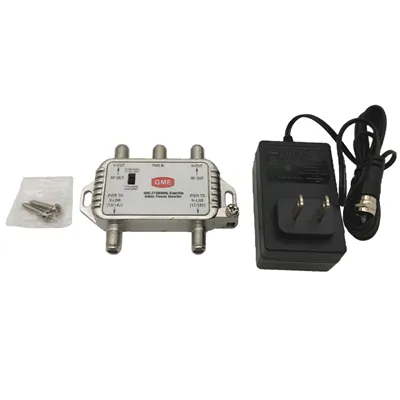
As a G.hn supplier, we offer a range of products that incorporate these authentication mechanisms. For example, our EOC With WiFi6 solution provides high - speed Ethernet over coaxial cables with the added benefit of WiFi 6 connectivity. This product uses both PSK and IEEE 802.1X authentication to ensure a secure network connection.
Our G.hn EoC Controller Endpoint is another product that plays a crucial role in network authentication. It acts as the network controller, managing the authentication process and ensuring that only authorized devices can connect to the network.
The G.hn Endpoint Of Coaxial with WiFi 6 is designed to be a user - friendly device that can easily connect to the network. It supports both authentication methods, allowing users to choose the one that best suits their needs.
Challenges and Future Developments
Despite the effectiveness of the authentication mechanisms in G.hn, there are still some challenges. One of the main challenges is the increasing sophistication of cyber threats. As hackers develop new techniques to bypass authentication mechanisms, we need to continuously improve the security of our products.
Another challenge is the need for user - friendly authentication methods. While more secure authentication mechanisms such as IEEE 802.1X offer better protection, they can be complex for non - technical users to set up. We need to find a balance between security and usability to ensure that all users can benefit from a secure network.
In the future, we expect to see further developments in G.hn authentication. This may include the integration of more advanced encryption algorithms, the use of biometric authentication, and the development of more seamless and user - friendly authentication processes.
Conclusion
Network authentication is a critical aspect of G.hn technology. It plays a vital role in protecting user privacy, maintaining network integrity, and enhancing the user experience. As a G.hn supplier, we are committed to providing high - quality products that incorporate the latest authentication mechanisms.
If you are interested in learning more about our G.hn - based products or have any questions about network authentication, we encourage you to reach out to us for a procurement discussion. We have a team of experts who can provide you with detailed information and help you choose the best solution for your needs.
References
- ITU - T Recommendation G.hn (G.9960): Home networking over coaxial cable, power line and telephone line.
- IEEE 802.1X - 2010 Standard for Local and Metropolitan Area Networks - Port - based Network Access Control.