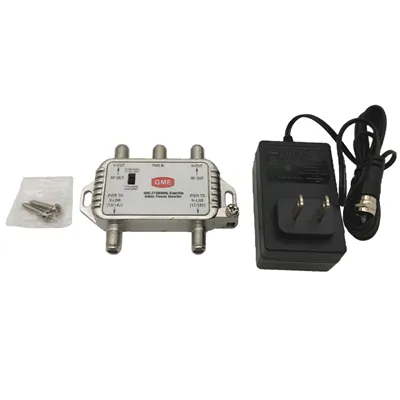
As a provider of MoCA (Multimedia over Coax Alliance) products, I'm often asked about the cognitive domains that the Montreal Cognitive Assessment (MoCA) assesses. In this blog post, I'll delve into the various cognitive areas evaluated by the MoCA and explain how our MoCA - related products can support relevant research and clinical applications.
Overview of MoCA
The MoCA is a widely used screening tool designed to detect mild cognitive impairment (MCI). It was developed by Dr. Ziad Nasreddine and colleagues in 2005. Since then, it has become a cornerstone in the early identification of cognitive decline, which is crucial for timely intervention and management of neurodegenerative diseases such as Alzheimer's.
Cognitive Domains Assessed by MoCA
1. Visuospatial and Executive Functions
The MoCA evaluates visuospatial and executive functions through tasks like clock - drawing and cube copying. In the clock - drawing test, the patient is asked to draw a clock showing a specific time. This task requires the integration of multiple cognitive processes, including planning, visuospatial perception, and motor skills. Cube copying assesses the ability to reproduce a three - dimensional figure accurately, which is related to spatial awareness and the ability to translate visual information into motor output. These functions are often affected in the early stages of neurodegenerative diseases, and detecting deficits in this domain can be an early warning sign.
For researchers and clinicians using MoCA in their work, our 4 Way MOCA Amplifier can be a valuable tool. It helps in distributing high - quality signals in a network environment, ensuring that data from cognitive assessment devices can be transmitted efficiently, whether it's in a multi - room testing facility or a large - scale research project.
2. Naming
Naming is another important cognitive domain evaluated by the MoCA. The test presents pictures of animals and asks the patient to name them. This simple task taps into semantic memory, which is the long - term memory for facts and knowledge. Difficulties in naming can be an early sign of semantic dementia or other forms of cognitive decline. Impaired naming may also be related to problems in accessing stored information in the brain's semantic network.
Our MoCA 2.5 Adapter can enhance the connectivity of devices used in cognitive assessment. In a clinical setting, it can connect various assessment tools, such as tablets used for presenting the naming tasks, to the network, enabling seamless data collection and analysis.
3. Memory
The MoCA includes a memory sub - test where a list of words is presented to the patient for immediate recall and then for delayed recall after a few minutes. This assesses both short - term and long - term memory. Short - term memory is responsible for holding information briefly, while long - term memory stores information over an extended period. Memory impairment is one of the most well - known symptoms of Alzheimer's disease, and the MoCA's memory assessment can help in identifying early memory deficits.
In a research or clinical environment, efficient data management is crucial for analyzing memory test results. Our 8 Way MOCA Amplifier can support a larger number of connected devices, such as multiple computers used for data storage and analysis. This ensures that the data from memory tests and other MoCA sub - tests can be collected, stored, and processed effectively.
4. Attention
Attention is evaluated through tasks such as digit span and serial 7s. The digit - span test measures the patient's ability to repeat a series of numbers forward and backward, which assesses both auditory attention and working memory. Serial 7s require the patient to subtract 7 from 100 repeatedly, which tests concentration, mental calculation, and sustained attention. Deficits in attention can affect a person's ability to perform daily tasks, learn new information, and interact socially.
5. Language
The language domain in the MoCA is assessed through tasks like sentence repetition and word fluency. Sentence repetition evaluates the patient's ability to reproduce a complex sentence accurately, which is related to language comprehension and production. Word fluency tasks ask the patient to generate as many words as possible from a specific category (e.g., animals) within a given time frame. This measures lexical retrieval and language productivity. Language impairment can be an early sign of primary progressive aphasia or other language - related cognitive disorders.
6. Abstraction
Abstraction is tested by asking the patient to explain the similarity between two concepts (e.g., an orange and a banana). This task requires the ability to think abstractly, identify common features, and form generalizations. Impaired abstraction is often associated with frontal lobe dysfunction and can be an early sign of cognitive decline, especially in diseases that affect the prefrontal cortex.


7. Orientation
Orientation to time and place is the final domain assessed by the MoCA. The patient is asked to state the date, day of the week, month, year, and their current location. This simple assessment provides information about the patient's overall awareness of their environment and temporal context. Disorientation can be a sign of acute confusion, delirium, or more chronic cognitive impairment.
Importance of MoCA in Clinical and Research Settings
The MoCA's comprehensive assessment of multiple cognitive domains makes it a powerful tool in both clinical and research settings. In clinical practice, it helps doctors quickly identify patients at risk of cognitive decline, allowing for early intervention and treatment. Early detection can improve the quality of life for patients and their families by enabling the implementation of strategies to slow down the progression of the disease.
In research, the MoCA provides a standardized way to measure cognitive function across different populations and studies. This allows for comparisons between different treatment groups, the evaluation of new therapeutic interventions, and the exploration of the underlying mechanisms of cognitive decline.
How Our Products Support MoCA - Related Work
Our MoCA - related products play a vital role in facilitating the use of MoCA in various settings. The amplifiers and adapters ensure reliable network connectivity, which is essential for the seamless operation of cognitive assessment devices. Whether it's transmitting data from touch - screen tablets used for MoCA administration to a central server for analysis or ensuring that multiple assessment stations in a large - scale study are connected, our products provide the necessary infrastructure.
Contact Us for Procurement
If you're involved in MoCA - related research, clinical practice, or any project that requires high - quality network solutions, we're here to help. We understand the importance of reliable connectivity in cognitive assessment work, and our products are designed to meet the specific needs of this field. Whether you need a single MoCA 2.5 Adapter for a small clinic or multiple 8 Way MOCA Amplifier units for a large - scale research project, we can provide you with the right solution.
Contact us to discuss your procurement needs, and our team of experts will be happy to assist you in finding the best products for your requirements.
References
Nasreddine, Z. S., Phillips, N. A., Bédirian, V., Charbonneau, S., Whitehead, V., Collin, I., ... & Chertkow, H. (2005). The Montreal Cognitive Assessment, MoCA: A brief screening tool for mild cognitive impairment. Journal of the American Geriatrics Society, 53(4), 695 - 699.