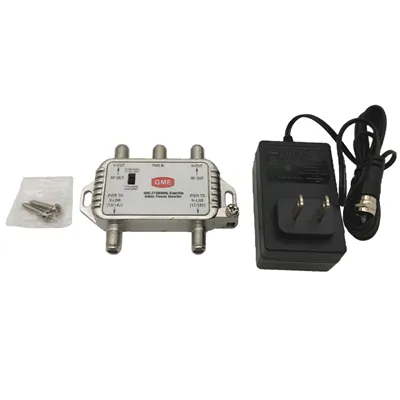
Hey there! As a MoCA supplier, I've seen firsthand how crucial it is to understand how MoCA assesses language skills. It might seem a bit off - topic at first, since MoCA is often associated with networking tech like 4 Way MOCA Amplifier and Return Path Filter and MoCA 2.5 Adapter. But trust me, there's a connection, and I'm gonna break it down for you.
The Basics of MoCA in General
First things first, let's talk a bit about MoCA itself. MoCA, or Multimedia over Coax Alliance, is a technology that allows data to be transmitted over coaxial cables. It's super useful for setting up home networks, especially when you want high - speed connections without having to run a bunch of new wires. You can use it to connect devices like TVs, gaming consoles, and computers, making it a versatile solution for modern households.
But MoCA isn't just about networking. There's also something called the Montreal Cognitive Assessment (MoCA), which is a tool used to assess a person's cognitive functions, including language skills. And yeah, it can get a bit confusing with the same acronym being used for different things, but that's how it is!
How the MoCA Test Assesses Language Skills
The MoCA test is designed to evaluate a range of cognitive domains, and language is one of the key areas it looks at. Language assessment in the MoCA involves several different components.
One of the first things it checks is a person's ability to name objects. The test usually presents a picture of some common objects, and the person taking the test has to name them. This simple task can tell a lot about a person's vocabulary retrieval and word - finding abilities. For example, if someone has trouble coming up with the name of a basic object, it could be a sign of language difficulties.
Another aspect is verbal fluency. The MoCA typically asks the person to generate as many words as they can from a specific category (like animals) within a set time frame, usually one minute. This challenges the part of the brain responsible for accessing and organizing a large number of words quickly. Good verbal fluency shows that a person's language centers are efficient at retrieving and generating words.
Repetition is also a key part of the language assessment in MoCA. The tester will say a phrase or a sentence, and the person being tested has to repeat it exactly. This measures the ability to accurately process and reproduce spoken language, which includes aspects like understanding grammar and syntax, as well as pure word - repetition skills.
Comprehension is another major component. The MoCA uses various tasks to test how well a person understands spoken language. For instance, the tester might give a series of simple commands, like "point to the door" or "touch your nose and then your ear." If someone has trouble following these commands, it could indicate problems with language comprehension.
Why Language Assessment in MoCA Matters
Assessing language skills through MoCA is incredibly important. In the medical and cognitive - research fields, early detection of language - related problems can be a sign of various underlying conditions. For example, it can be an early indicator of Alzheimer's disease or other forms of dementia. Language difficulties often start subtlety, and the MoCA can catch these early signs, allowing for earlier intervention and treatment.
In a broader context, understanding a person's language skills is also important for education and rehabilitation. If a child or an adult has language - based learning difficulties, identifying these issues through the MoCA can help educators and therapists develop targeted strategies to improve their language abilities.
The Connection with MoCA Networking Tech (Yes, There is One!)
You might be wondering, "How does all this cognitive - assessment stuff relate to my MoCA networking products?" Well, think about it from a business perspective. In our case, as a MoCA supplier, we deal with customers from all walks of life. Understanding the context of MoCA, including the cognitive - assessment side, can give us a broader perspective on our customers' needs.
For example, in a healthcare setting, where accurate communication is crucial, having a reliable MoCA - based network can ensure that patient information is transmitted quickly and securely. And if we understand the importance of language skills in a healthcare context (thanks to our knowledge of the MoCA cognitive assessment), we can better tailor our networking solutions to meet the specific needs of these facilities.
Impact on Different User Groups
Let's take a look at how the assessment of language skills through MoCA affects different user groups.
Healthcare Professionals
For doctors, nurses, and other healthcare providers, the MoCA test is a valuable tool. It helps them quickly and effectively screen patients for cognitive decline, especially related to language. By identifying language - related issues early, they can initiate appropriate treatment plans, whether it's medication, therapy, or simply closer monitoring. This can lead to better patient outcomes and improved quality of life for those with cognitive disorders.
Educators
In the education sector, the results of a MoCA language assessment can guide teachers in designing personalized learning plans. If a student has trouble with vocabulary, the teacher can focus on building up their word bank. If there are issues with comprehension, targeted reading and listening exercises can be implemented. This customized approach can make a huge difference in how well a student learns and develops their language skills.
Consumers of MoCA Networking Products
While the cognitive - assessment MoCA might not directly impact your day - to - day use of MoCA 2.5 Adapter or other networking products, the broader understanding of MoCA as a concept can influence your purchasing decisions. For example, if you're running a business in the healthcare or education sectors, you'll be more likely to choose a MoCA networking solution that can support the specific communication needs of these industries.
Looking to the Future
As technology advances, we can expect both the MoCA networking technology and the MoCA cognitive assessment to evolve. In the world of networking, we're likely to see even faster and more reliable MoCA solutions. For example, we might see improvements in the 4 Way MOCA Amplifier that make it even more efficient at boosting signals over coaxial cables.
On the cognitive - assessment side, research is constantly being done to make the MoCA test more accurate and comprehensive. Maybe in the future, it will be able to detect even more subtle language and cognitive changes, allowing for even earlier intervention.


Wrapping Up and Let's Talk Business
To sum it all up, understanding how MoCA assesses language skills gives us a deeper appreciation of the MoCA concept as a whole, whether it's in the cognitive - assessment or networking realms. At the end of the day, as a MoCA supplier, we're all about providing the best products and solutions to meet your needs.
If you're interested in any of our MoCA networking products, like the 4 Way MOCA Amplifier, Return Path Filter, or MoCA 2.5 Adapter, we'd love to have a chat with you. Whether you're a small business owner looking to set up a reliable network or a large institution in need of a customized solution, we're here to help. Get in touch with us to start that procurement conversation, and let's find the best MoCA products for you.
References
- Nasreddine, Z. S., Phillips, N. A., Bédirian, V., Charbonneau, S., Whitehead, V., Collin, I., ... & Chertkow, H. (2005). The Montreal Cognitive Assessment, MoCA: A brief screening tool for mild cognitive impairment. Journal of the American Geriatrics Society, 53(4), 695 - 699.
- Emery, L. S., & Gove, A. C. (2018). The Role of the Montreal Cognitive Assessment (MoCA) in the Detection of Mild Cognitive Impairment and Dementia. International Journal of Environmental Research and Public Health, 15(2), 251.