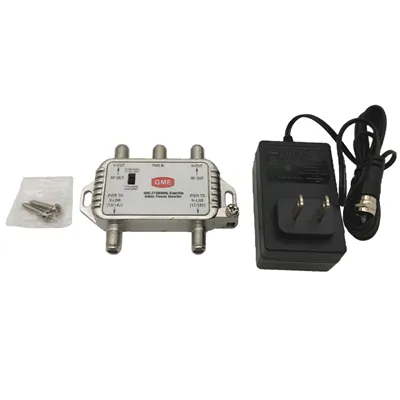
In the realm of modern television and satellite distribution systems, multiswitches play a pivotal role. As a seasoned multiswitch supplier, I've had the privilege of witnessing the evolution of these devices and understanding their intricate requirements. In this blog post, I'll delve into the input requirements of a multiswitch, shedding light on what you need to know to make informed decisions.
Understanding Multiswitches
Before we dive into the input requirements, let's briefly understand what a multiswitch is. A multiswitch is a device used in satellite and cable television systems to distribute multiple satellite signals to multiple receivers. It allows users to connect multiple TVs or receivers to a single satellite dish, providing access to a wide range of channels without the need for multiple dishes.


Multiswitches come in various configurations, such as 4X8 HDTV Digital Multiswitch, 3X4 Digital Multiswitch, and 3X8 Digital Multiswitch. The numbers in these configurations represent the number of inputs and outputs. For example, a 4X8 multiswitch has four inputs and eight outputs, meaning it can receive signals from four satellite sources and distribute them to eight different receivers.
Input Signal Types
The first and most crucial aspect of the input requirement of a multiswitch is the type of input signals it can handle. There are primarily two types of satellite signals: vertical and horizontal polarization, as well as two different frequencies for high and low bands.
- Polarization: Satellite signals are polarized either vertically or horizontally. A multiswitch must be able to receive and process both types of polarized signals. Most modern multiswitches are designed to handle both vertical and horizontal polarization simultaneously, allowing for the reception of a wider range of channels.
- Frequency Bands: Satellite signals are also divided into high and low frequency bands. The low band typically ranges from 950 - 1450 MHz, while the high band ranges from 1450 - 2150 MHz. A multiswitch needs to be capable of receiving and processing signals from both frequency bands to provide access to all available channels.
Input Power Requirements
Another important input requirement is the power needed to operate the multiswitch. Multiswitches are typically powered by the satellite receivers through the coaxial cables. The power is usually provided in the form of direct current (DC) voltage.
- Voltage Range: The voltage required by a multiswitch can vary depending on the model and manufacturer. However, most multiswitches operate within a voltage range of 13 - 18 volts DC. It's essential to ensure that the satellite receivers can supply the appropriate voltage to the multiswitch to ensure proper operation.
- Power Consumption: The power consumption of a multiswitch also varies depending on its size and configuration. Larger multiswitches with more inputs and outputs generally consume more power than smaller ones. It's important to consider the power consumption of the multiswitch when designing a satellite distribution system to avoid overloading the power supply.
Input Signal Strength
The strength of the input signals is another critical factor that affects the performance of a multiswitch. The signal strength is measured in decibels (dB). A strong signal is necessary to ensure clear and reliable reception of satellite channels.
- Minimum Signal Strength: Different multiswitches have different minimum signal strength requirements. Generally, a signal strength of at least -60 dBm is recommended for optimal performance. If the signal strength is too low, the multiswitch may not be able to receive and process the signals effectively, resulting in poor picture quality or loss of channels.
- Signal Quality: In addition to signal strength, the quality of the input signals is also important. The signal quality is measured in terms of signal-to-noise ratio (SNR). A high SNR indicates a clean and strong signal, while a low SNR indicates a noisy and weak signal. A multiswitch needs to be able to handle signals with a sufficient SNR to provide clear and reliable reception of satellite channels.
Input Connector Types
The type of input connectors used on a multiswitch is also an important consideration. The most common type of connector used in satellite systems is the F-type connector.
- F-Type Connectors: F-type connectors are widely used in satellite and cable television systems due to their ease of installation and reliability. They provide a secure connection between the coaxial cables and the multiswitch, ensuring a good electrical connection and minimizing signal loss.
- Compatibility: It's important to ensure that the coaxial cables used in the satellite distribution system are compatible with the F-type connectors on the multiswitch. Using the wrong type of connectors or cables can result in poor signal quality or even damage to the multiswitch.
Input Isolation
Input isolation is a measure of how well a multiswitch can separate the input signals from each other. Good input isolation is essential to prevent interference between different satellite sources.
- Isolation Rating: The isolation rating of a multiswitch is measured in decibels (dB). A higher isolation rating indicates better separation between the input signals. Most modern multiswitches have an isolation rating of at least 20 dB, which is sufficient to prevent interference between different satellite sources.
- Interference Prevention: By providing good input isolation, a multiswitch can prevent interference between different satellite sources, ensuring clear and reliable reception of satellite channels. This is particularly important in areas where multiple satellite dishes are used to receive signals from different satellites.
Conclusion
In conclusion, understanding the input requirements of a multiswitch is crucial for designing a reliable and efficient satellite distribution system. From signal types and power requirements to signal strength and connector types, each aspect plays a vital role in ensuring the proper operation of the multiswitch.
As a trusted multiswitch supplier, we offer a wide range of high-quality multiswitches that meet the diverse input requirements of our customers. Our multiswitches are designed to provide excellent performance and reliability, ensuring clear and uninterrupted reception of satellite channels.
If you're in the market for a multiswitch or need more information about our products, we encourage you to contact us for a detailed discussion. Our team of experts is ready to assist you in finding the right multiswitch solution for your specific needs. Let's work together to build a satellite distribution system that meets your expectations.
References
- Satellite Television Technology Handbook, Second Edition by Chris Lee
- The Complete Guide to Satellite TV Installation by John Smith