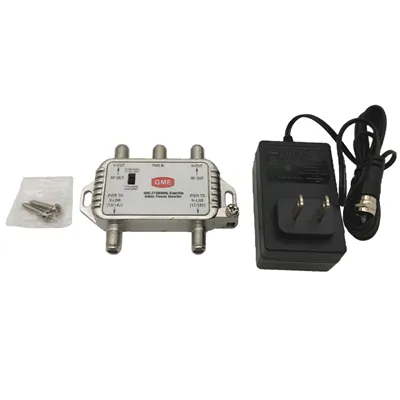
Hey there! As a supplier of CATV amplifiers, I often get asked about the power consumption of these nifty devices. So, let's dive right in and explore what goes into the power consumption of a CATV amplifier.
First off, what exactly is a CATV amplifier? Well, it's a crucial piece of equipment in a cable television system. It boosts the signal strength of the cable TV signal, ensuring that you get a clear and crisp picture and sound on your TV. There are different types of CATV amplifiers, like the Bi Directional Push Pull Distribution Amplifier, Wall Mount Distribution Amplifier, and Broadband Push Pull Headend Amplifier. Each type has its own unique features and power requirements.
Now, let's talk about power consumption. The power consumption of a CATV amplifier depends on several factors. One of the main factors is the type of amplifier. For example, a headend amplifier, which is used at the source of the cable TV signal, usually has a higher power consumption compared to a distribution amplifier, which is used to distribute the signal to multiple TVs.
The gain of the amplifier also plays a big role. Gain refers to the amount of amplification the amplifier provides. The higher the gain, the more power the amplifier needs to operate. So, if you need a high-gain amplifier to cover a large area or to overcome signal losses, you can expect it to consume more power.
Another factor is the number of output ports. Amplifiers with more output ports generally consume more power because they need to amplify the signal for each port. For instance, a 4-port amplifier will use more power than a 2-port amplifier.
The efficiency of the amplifier's power supply is also important. A more efficient power supply will convert more of the electrical energy into useful signal amplification and less into heat. This means that an amplifier with a high-efficiency power supply will consume less power overall.


Let's take a closer look at some typical power consumption values. A small distribution amplifier with a single output port might consume around 5 - 10 watts of power. This is relatively low, and it's suitable for small residential setups. On the other hand, a high-gain headend amplifier with multiple output ports could consume anywhere from 20 - 50 watts or even more.
It's also worth noting that some modern CATV amplifiers are designed to be more energy-efficient. They use advanced technologies like switched-mode power supplies and low-power components to reduce power consumption without sacrificing performance.
So, why does power consumption matter? Well, for one, it affects your electricity bill. If you have multiple amplifiers in your cable TV system, the cumulative power consumption can add up over time. Additionally, lower power consumption is better for the environment, as it reduces the overall energy demand.
If you're in the market for a CATV amplifier, it's important to consider the power consumption along with other factors like gain, frequency range, and number of output ports. You want to find an amplifier that meets your signal requirements while keeping power consumption in check.
As a supplier, we offer a wide range of CATV amplifiers with different power consumption levels. Whether you need a low-power distribution amplifier for your home or a high-power headend amplifier for a commercial setup, we've got you covered. Our amplifiers are designed to provide reliable performance while being energy-efficient.
If you're interested in learning more about our CATV amplifiers or have any questions about power consumption, feel free to reach out. We're here to help you make the right choice for your cable TV system. Whether you're a homeowner looking to improve your TV reception or a business owner setting up a large-scale cable TV network, we can provide you with the right amplifier solution.
In conclusion, the power consumption of a CATV amplifier depends on various factors such as the type of amplifier, gain, number of output ports, and power supply efficiency. By understanding these factors, you can make an informed decision when choosing an amplifier that meets your needs while minimizing energy costs. So, don't hesitate to contact us if you're ready to take your cable TV system to the next level.
References
- General knowledge of CATV amplifier technology and power consumption principles.