As a CATV provider, I often get asked about the speed of CATV - based Internet service. It's a hot topic, and for good reason. In today's digital age, everyone wants fast and reliable Internet, and CATV has emerged as a strong player in the market.
Let's start by understanding what CATV - based Internet service is. CATV, or Cable Television, has been around for a long time. It uses coaxial cables to transmit television signals. Over the years, these same cables have been adapted to provide Internet access. The basic idea is to use the unused frequency bands on the coaxial cables to send data packets.
So, what's the speed like? Well, it can vary quite a bit. The speed of CATV - based Internet service depends on several factors. One of the main factors is the infrastructure. Older coaxial cable systems may not be able to support the highest speeds. However, many providers, including us, have been upgrading our networks. We've been investing in better cables and more advanced equipment to boost the speed.
Another factor is the service plan you choose. Just like with other Internet service providers, we offer different plans with varying speeds. You can go for a basic plan if you mainly use the Internet for light browsing, checking emails, and streaming standard - definition videos. These plans usually offer speeds in the range of 25 - 50 Mbps.
But if you're into heavy - duty activities like 4K video streaming, online gaming, or working with large files, you'll want a higher - speed plan. Our high - end plans can offer speeds of up to 1 Gbps or even more in some areas. That's seriously fast! With a 1 Gbps connection, you can download a full - length HD movie in just a few seconds.
Now, let's talk about how we achieve these speeds. We use a technology called DOCSIS (Data Over Cable Service Interface Specification). DOCSIS is like the rulebook that tells our equipment how to send and receive data over the coaxial cables. The latest version, DOCSIS 3.1, can significantly increase the speed and efficiency of our CATV - based Internet service.
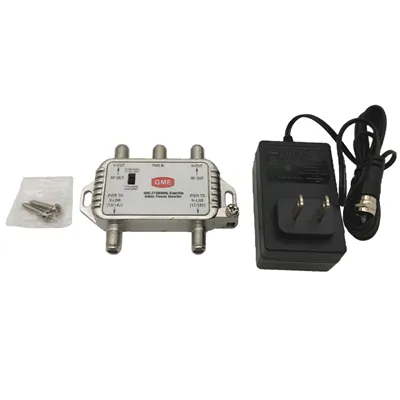
To make sure our customers get the best possible speed, we also use a variety of amplifiers. For example, the SWM Extension Line Amplifier is a great piece of equipment. It helps to boost the signal strength over long distances, ensuring that even customers who are far from the main distribution point can get a fast and stable connection.
Another useful amplifier is the Wall Mount Distribution Amplifier. This amplifier is designed to distribute the signal evenly to multiple devices in a home or office. It's perfect for households or businesses where multiple people are using the Internet at the same time.
In addition to amplifiers, we also use CATV Directional Coupler. These couplers are used to split the signal and send it to different parts of the network. They help to manage the flow of data and ensure that each device gets the appropriate amount of bandwidth.
One of the advantages of CATV - based Internet service is its reliability. Unlike some other types of Internet connections, such as satellite Internet, which can be affected by weather conditions, CATV is generally more stable. The coaxial cables are buried underground or strung on poles, protecting them from the elements.


However, it's important to note that the actual speed you experience may not always match the advertised speed. This can be due to several reasons. For example, if there are a lot of people in your area using the Internet at the same time, it can cause congestion on the network. Also, the performance of your own devices, such as your router or computer, can affect the speed.
If you're experiencing slow speeds, there are a few things you can do. First, make sure your devices are up - to - date. Outdated software or hardware can slow down your Internet connection. You can also try restarting your router. Sometimes, a simple restart can fix a lot of problems. And if the problem persists, you can always give us a call, and our technical support team will be happy to help.
In conclusion, the speed of CATV - based Internet service can be quite impressive. With the right infrastructure, service plan, and equipment, we can offer speeds that are more than enough for most people's needs. Whether you're a casual Internet user or a power - hungry gamer, we've got a plan that's right for you.
If you're interested in learning more about our CATV - based Internet service or want to discuss which plan would be best for you, we'd love to hear from you. Just reach out to us to start a conversation about your Internet needs and how we can meet them. We're here to provide you with the best possible Internet experience at a great price.
References
- General knowledge about CATV and Internet technology from industry publications and research.
- Information on DOCSIS technology from official DOCSIS documentation.