Hey there! As a proud MoCA supplier, I'm super stoked to dive into how MoCA evaluates working memory. Working memory is like a mental sticky - note pad. It's where we hold and manipulate information for short - term tasks. Let's dig in and see how MoCA fits into all of this.
First off, what is MoCA? MoCA stands for Multi - Gigabit over Coax Alliance. It's a technology that allows high - speed data transmission over coaxial cables. You know, those cables that have been around forever for TV and cable services? Well, MoCA breathes new life into them, turning your old coaxial cables into high - speed data highways.
Now, let's talk about evaluating working memory. In the context of MoCA, we're not directly evaluating the human working memory. Instead, we're looking at how MoCA can handle data in a way that's similar to how working memory functions.
Working memory has a limited capacity. It can only hold so much information at once. Think of it like a small desk. You can only spread out so many papers before it gets crowded. Similarly, a MoCA network has a limited bandwidth. This bandwidth determines how much data can be transmitted at a given time. To evaluate how well MoCA performs in terms of this "capacity," we look at metrics like data transfer rates.
The data transfer rate is basically how fast data can move from one point to another in the MoCA network. Just like a high - capacity working memory can process and handle more information quickly, a MoCA network with a high data transfer rate can move more data in less time. For example, our MoCA 2.5Gigabit Adapter is designed to offer high - speed data transfers, which is crucial when you have multiple devices trying to send and receive data simultaneously. It's like having a super - efficient secretary who can handle a lot of tasks at once without getting overwhelmed.
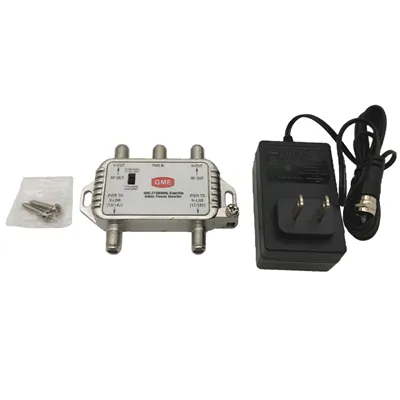
Another aspect of working memory is its ability to filter out irrelevant information. Our brains are constantly bombarded with stimuli, and we need to focus on what's important. In a MoCA network, there's a similar concept called signal filtering. The Return Path Filter plays a key role here. It helps to block out unwanted signals and interference, ensuring that only the relevant data is transmitted and received. This is like having a filter in your brain that lets in only the important thoughts and ideas, keeping the mental clutter at bay.
Latency is also an important factor when evaluating how MoCA performs in relation to working memory. Latency is the delay between the time a signal is sent and the time it's received. Just like a slow - reacting working memory can cause delays in decision - making, high latency in a MoCA network can lead to slow data processing and a poor user experience. We want to minimize latency as much as possible to ensure that the MoCA network is as responsive as a sharp working memory. For example, in a home where you're streaming high - definition video or playing an online game, low latency is essential for smooth and uninterrupted performance.
The reliability of the MoCA network is akin to the stability of working memory. A reliable working memory allows us to trust that the information we've stored will be available when we need it. In a MoCA network, reliability means that data can be transmitted without errors or interruptions. We use various technologies and protocols to ensure reliability. For instance, some MoCA devices are equipped with error - correction mechanisms. These mechanisms can detect and fix errors in the data stream, just like proofreading and correcting mistakes in your thoughts before you act on them.
MoCA also has to deal with multiple "threads" of data, similar to how working memory can handle multiple tasks simultaneously. In a typical home network, you might have a smart TV streaming a movie, a laptop downloading a file, and a smartphone connected to the internet. The MoCA network needs to manage these different data streams efficiently. This is where features like Quality of Service (QoS) come in. QoS allows the network to prioritize certain types of data over others. For example, if you're in the middle of an important video conference, the MoCA network can prioritize the video data to ensure a smooth and clear connection, just like your working memory prioritizes important tasks over less urgent ones.
Now, if you're into setting up a large - scale MoCA network, like in an office building or a multi - unit complex, you might need something extra to boost the signal and coverage. That's where the 4 Way MOCA Amplifier comes into play. It's like a power - up for your MoCA network. It helps to extend the reach of the MoCA signal, ensuring that every corner of the building gets a strong and stable connection. This is similar to having a well - functioning brain that can spread its "thinking power" across different tasks and areas.
In a nutshell, evaluating how MoCA performs is a lot like looking at the different aspects of working memory. We focus on capacity, filtering, latency, reliability, and the ability to manage multiple tasks. Whether you're a homeowner looking for a better home network or a business owner planning a large - scale installation, MoCA offers a lot of benefits.


If you're interested in any of our MoCA products or want to discuss how MoCA can meet your specific needs, don't hesitate to reach out. We're here to help you build a high - performance MoCA network that works as smoothly as a well - tuned working memory. Whether it's for enhanced home entertainment, a more efficient home office, or a robust business network, MoCA has got you covered.
References:
- Industry studies on MoCA technology performance
- Whitepapers on working memory and information processing
- Product documentation for MoCA devices