

In today's world, large-scale deployment of fiber networks is the backbone of digital transformation for cities, enterprises, and service providers. It's critical to understand the difference between optical line terminals (OLTs) and optical network terminals (ONTs).
You need to understand exactly how and where OLTs and ONTs fit together in your passive optical network (PON). Different choices impact every critical decision you make, including coverage planning, deployment timelines, compatibility testing, and ongoing maintenance.
Whether you're looking to deploy high-capacity OLTs in the central office or edge-class ONTs in residential, enterprise, or data center environments, Good Mind Electronics can help. We offer fully customized, fast-delivery FTTX systems, including ODM design, modular hardware, high-density fiber patch cords, and end-to-end support.
PON Network Architecture Overview
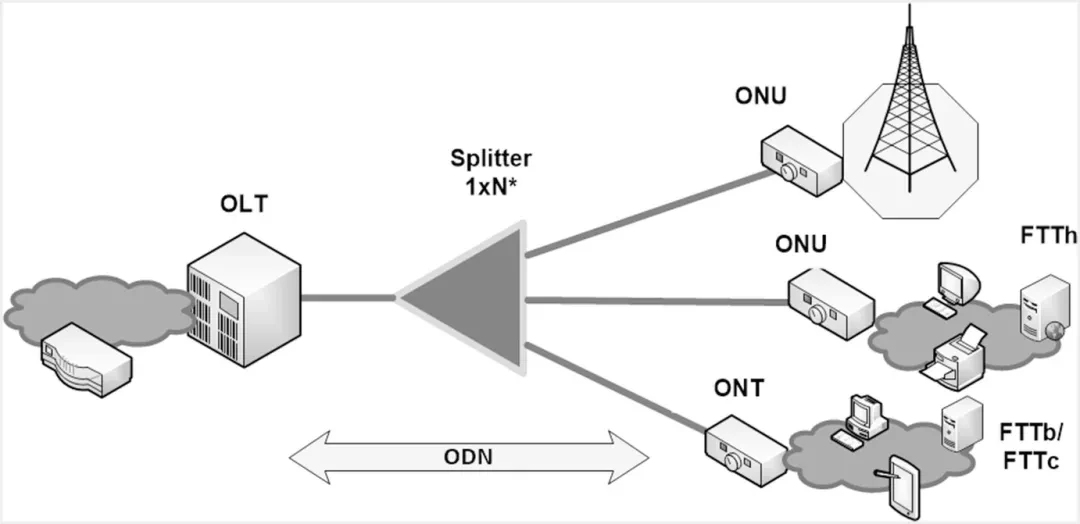
A passive optical network (PON) is built around two star players: the OLT at the service provider's central office and the ONTs tucked away at user homes or business premises. In this setup, a single fiber optical cable runs from the OLT to a passive splitter, branching out to multiple ONTs without any active electronics in between. That "passive" bit makes it simpler and more cost‑effective to distribute data.
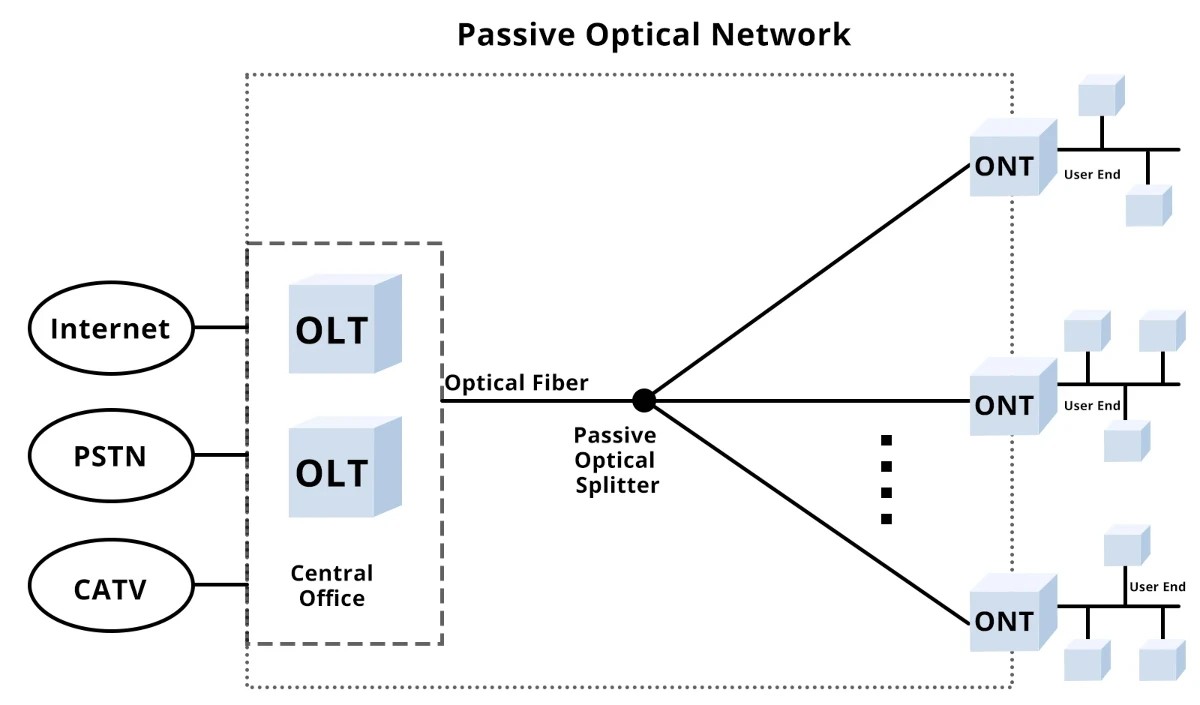
- OLT (Optical Line Terminal): Acts as the control hub. It manages bandwidth allocation, aggregates traffic, and converts electrical signals from the core network into optical signals for transmission over the fiber.
- ONT (Optical Network Terminal): Sits at the user side equipment, where it receives data, decapsulates the optical signal transmitted by the OLT, and turns it back into an electrical signal your routers, PCs, or access points can actually use.
Together, the OLT and ONT form a seamless optical distribution chain. The OLT orchestrates upstream and downstream traffic across your fiber network, while each ONT handles the final mile of delivery, ensuring you get reliable fiber internet exactly where you need it.
What Is an OLT (Optical Line Terminal)
OLT stands for Optical Line Terminal. In the world of fiber optic networking, it's the control center that brings high‑speed internet service from the core network into your PON (passive optical network).
You'll usually find the OLT tucked away in the provider's central office, data center, or headend site. From there, it speaks to dozens or even hundreds of Optical Network Terminals (ONTs) out in the field, all over a single fiber optical cable and a passive splitter.
OLT Functions
- Data Aggregation & Multiplexing The OLT collects traffic from every ONT, combining upstream and downstream streams into a manageable flow.
- Upstream/Downstream Management & QoS Scheduling It allocates time slots and bandwidth so that latency‑sensitive applications (like voice or video) get priority, and everyone enjoys a consistent experience.
- Signal Conversion (Electrical ↔ Optical) Electrical signals from the ISP backbone get turned into light pulses for distribution, then converted back when data returns.
OLT Components
- CPU & Management Module Acts as the brains, running protocols and monitoring performance.
- Register Memory (RM) Stores configuration files and operational parameters.
- Optical Transceiver Modules Upstream laser drivers and downstream photodiodes handle the light‑to‑electric switching.
- Power Supply & Redundancy Design Hot‑swappable power units and backup components keep your network online even during hardware failures.
|
Specification |
Typical Value |
Application Scenario |
|
PON Ports |
16 / 32 / 64+ |
Telecom central office, campus core |
|
Downstream Rate |
2.5 Gbps (GPON) / 10 Gbps (XGS‑PON) |
High‑speed broadband rollouts |
|
Redundancy |
Dual hot‑swappable power supplies, CPU |
Carrier‑grade reliability, 99.999% SLA |
|
Management |
SNMP, CLI, Web GUI |
Remote monitoring, zero‑touch updates |
|
Dimensions & Form Factor |
19″ rack‑mountable chassis |
Data centers, telecom POPs |
What Is an ONT (Optical Network Terminal)
ONT stands for Optical Network Terminal (sometimes called an optical network unit or ONU). It's the device that brings your fiber internet right into your user home, office or campus, acting as the final bridge between the PON and your local network.
You'll find ONTs tucked away on the user side equipment-mounted on a wall in a residence, installed in an IT closet at an enterprise, or sitting in a telecom cabinet at a campus. They're the endpoints that receive data from the OLT over a single fiber optical cable and hand it off to your routers, switches, or Wi‑Fi access points.
ONT Functions
- Optical Signal Decapsulation & Demodulation The ONT strips away the PON framing and turns the light pulses back into an electrical signal your devices can understand.
- Upstream/Downstream Channel Management It buffers and schedules traffic so that voice calls, video streams, and bulk file transfers all get fair treatment-and when it's time to send data back, the ONT sends user data upstream in its assigned time slot.
ONT Components
- Optical Module for converting light to electricity (and vice versa).
- Ethernet Ports, plus optional WiFi and CATV interfaces for multi‑service delivery.
- Management Interface & Status Indicators so engineers can monitor link health and performance.
- Power Supply designed for low‑power, 24/7 operation.
ONT Deployment Characteristics
ONTs are built to be compact and energy‑efficient, making them easy to mount in tight spaces and keep running cool. Their simplified design means faster installs, quicker firmware upgrades, and straightforward remote monitoring-so maintenance teams can focus on scaling the network rather than chasing down individual units.
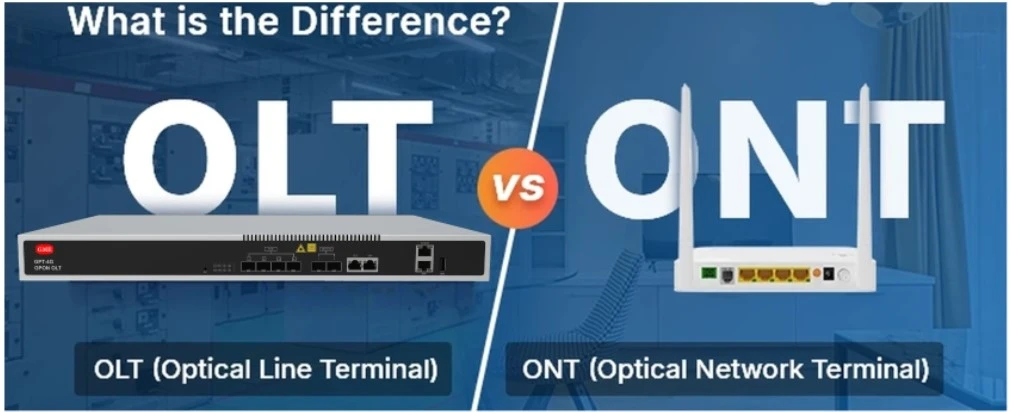
What Is The Difference Between OLT And ONT?
|
Feature |
Optical Line Terminal (OLT) |
Optical Network Terminal (ONT) |
|
Location |
Central office / data center |
User premises (home, office, campus) |
|
Role |
Network scheduling & signal aggregation |
Local signal decapsulation & distribution |
|
Form Factor |
Rack‑mounted, multi‑port |
Desktop‑style, single‑site |
|
Capacity |
16–64+ PON ports |
1–4+ user interfaces |
|
Traffic Management |
QoS scheduling, time‑slot allocation |
Buffers data, sends user data upstream |
|
Signal Conversion |
Electrical → Optical and vice versa |
Optical → Electrical for end devices |
|
Scalability |
Add PON cards or interconnect OLTs |
Deploy more ONTs one per location |
- Position & Coverage
The optical line terminal (OLT) lives in the service provider's central office, orchestrating traffic across an entire fiber network. One OLT can support dozens-or even hundreds-of downstream endpoints.
In contrast, each ONT sits at a single user home, office, or campus site. It handles connectivity for that location's devices, so coverage is strictly point‑to‑point, tailored to individual access needs.
- Functional Role
The OLT acts as the network scheduling center, aggregating upstream and downstream streams, performing Quality of Service (QoS) enforcement, and converting electrical signals from the core into optical pulses for distribution.
Meanwhile, the ONT acts as a local signal bridge, decapsulating that optical signal transmitted from the OLT, demodulating it back into an electrical signal, and handing it off to user side equipment-routers, switches, Wi‑Fi access points, or CATV boxes.
- Hardware Form Factor & Capacity
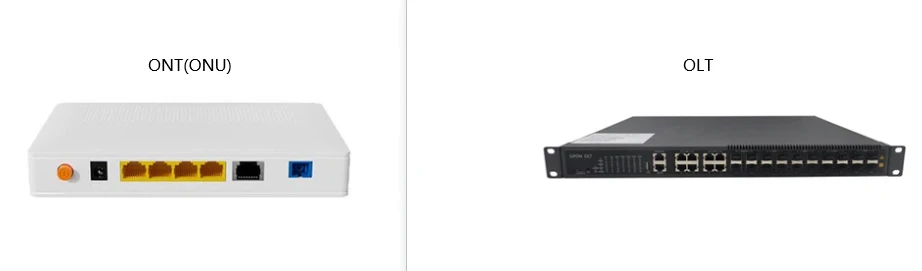
OLTs are typically rack‑mounted, with high‑density PON ports (16, 32, 64+), redundant power supplies, and robust cooling systems. This multi‑port architecture makes them ideal for telecom or large‑scale enterprise deployments.
ONTs are compact, desktop‑style devices designed for a single premise. They often feature a handful of Ethernet ports plus optional Wi-Fi or CATV interfaces, and draw minimal power for easy installation in tight spaces.
- Traffic Management & Signal Handling
On the network side, the OLT centrally manages both upstream and downstream traffic, allocating time slots so that latency‑sensitive services get priority and overall bandwidth is fairly shared across all connected ONTs.
At the edge, the ONT focuses on single‑user conversion-it "receives data" over the fiber, buffers packets, and transmits user data upstream in its assigned timeslot, ensuring each device gets the electrical signal it needs.
- Scalability & User Support
Scalability on the OLT side means adding more PON cards or even interconnecting multiple OLTs to expand your network footprint. It's built to grow as your subscriber base or campus size increases.
For ONTs, scalability translates into easy deployment of additional units-each new home or building gets its own ONT. Support is similarly localized: if one ONT has an issue, it doesn't disrupt the rest of the network, making maintenance and troubleshooting straightforward.
How OLT and ONT Solve Your Top Challenges
Once you understand the difference between OLT and ONT, you will face different challenges in terms of coverage, scheduling, compatibility, and ongoing support, depending on your mission. Here's how the right PON setup can meet your different needs:
- Telecom Operators & Municipal Infrastructure
When you're rolling out a city‑wide passive optical network (PON), the two biggest goals are broad fiber network coverage and rock‑solid uptime. Choosing an optical line terminal (OLT) with modular PON ports lets you scale smoothly as new neighborhoods come online, while strategically placed ONTs ensure consistent fiber internet delivery down to each street corner. Redundant power supplies and backup links help you meet stringent SLAs, so your internet service stays live even if one component needs maintenance.
- Real Estate Developers & Property Managers
In real estate projects, timing and budget are everything. Compact optical network terminals (ONTs) simplify installation in apartments, condos, or office floors, cutting deployment time by weeks. By standardizing on a proven OLT/ONT platform, you also lock in predictable hardware costs and avoid surprise fees during build‑out. Plus, automated provisioning features mean your maintenance team spends less time on manual configurations-and more time keeping residents happy.
- Large Enterprises & Campus IT Teams
Your campus network has to support everything from mission‑critical VoIP to high‑performance computing clusters. That means compatibility is key: you need OLTs that speak today's GPON or XGS‑PON protocols and ONTs that hand off clean electrical signals to your switches and access points. Building in extra PON ports and future‑proofing with higher‑speed optics lets you add buildings or labs without ripping out hardware.
- System Integrators
Integrators live and breathe end‑to‑end solutions, but PON can introduce integration headaches when vendor interfaces and management tools don't line up. A unified management module on your OLT, combined with ONTs that support standard SNMP or TR‑069, streamlines provisioning and troubleshooting. That consistency across optical distribution components cuts down on finger‑pointing and accelerates time‑to‑service for your clients.
- Data Center Operators
In a data center environment, compliance, reliability, and SLA enforcement are non‑negotiable. Deploying high‑density OLTs in your central office lets you aggregate massive volumes of fiber links, while ruggedized ONTs at the edge ensure low‑latency, deterministic performance. Look for equipment that's certified to industry standards and offers granular QoS controls-so you can guarantee uptime and meet audit requirements without inflating your footprint or power bill.
How to Choose the Right OLT & ONT Combination
When it comes to building a rock‑solid passive optical network (PON), picking the right optical line terminal (OLT) and optical network terminal (ONT) duo is half the battle. Here's a straightforward checklist to guide your decision:
- Requirements Assessment
Bandwidth Needs: Estimate peak downstream and upstream traffic per site. If each location demands 2.5 Gbps or more, consider XGS‑PON–ready OLTs and ONTs that support 10 Gbps interfaces.
Port Density: Match the number of PON ports on your OLT to the total ONT count you expect today-and plan for tomorrow. A 1:32 split ratio means one PON port can serve up to 32 user endpoints, but you might opt for 1:16 to ensure headroom.
Power Budget: Check optical budgets on your fiber optical cable runs. Longer distances or multiple splitters eat into your budget, so choose transceivers and ONTs with sufficient launch power and receiver sensitivity.
Future Expansion: Look for modular OLT chassis with extra slots or hot‑swappable PON cards. That way, you can add more ONTs as your subscriber base or device count grows.
- Vendor Credentials & Compliance
Standards Support: Verify ITU‑T (GPON, XGS‑PON) and IEEE (EPON) certifications to ensure interoperability.
Regulatory Requirements: Confirm equipment meets local telecom authority rules and safety regulations-especially in city or government infrastructure projects.
- Maintenance & Service
Warranty & SLAs: Aim for at least a three‑year warranty with guaranteed replacement times.
Remote Management: Ensure the OLT's management module and each ONT support protocols like SNMP or TR‑069 for zero‑touch provisioning.
Firmware Upgrades: Ask about firmware upgrade policies and whether your vendor provides automated, in‑field updates to keep QoS features current.
By following this checklist-aligning bandwidth, port counts, power budgets, certifications, and support-you'll land on an OLT/ONT pairing that fits your network's performance targets and budget constraints.
Conclusion
To wrap up, the optical line terminal (OLT) serves as the central command hub-aggregating traffic, enforcing QoS, and converting electrical signals into light, while the optical network terminal (ONT) acts as the local bridge, decapsulating that light back into electrical signals for end‑user devices.
Contact us today to discuss your specific needs. We'll provide an FTTX solution that bridges the gap between OLT and ONT, maximising performance, reliability, and your return on investment.


