Can MoCA be used to monitor the progression of cognitive decline?
Hey there! I'm with a MoCA supplier, and I've been getting a lot of questions lately about whether MoCA can be used to monitor the progression of cognitive decline. It's a super interesting topic, and I thought I'd share some insights with you all.
First off, let's talk a bit about what MoCA is. MoCA stands for Montreal Cognitive Assessment. It's a quick and easy test that doctors and other healthcare pros use to check for mild cognitive impairment (MCI) and early - stage dementia. It covers a bunch of different cognitive areas like attention, memory, language, and visuospatial skills.
Now, the big question: can it monitor the progression of cognitive decline? Well, the short answer is yes, but there are some things to keep in mind.
One of the great things about MoCA is its sensitivity. It's really good at picking up even small changes in cognitive function. This makes it a valuable tool for tracking how a person's cognitive abilities are changing over time. For example, if a patient takes the MoCA test at the beginning of a study or treatment, and then again a few months later, any drop in their score could indicate that their cognitive decline is progressing.
Let's say a person initially scores 25 out of 30 on the MoCA. A few months down the line, their score drops to 22. This decrease could be a sign that something is going wrong in their brain, and it might prompt further investigation or a change in treatment.


But it's not all smooth sailing. There are some limitations to using MoCA for monitoring cognitive decline. One issue is that the test results can be influenced by a bunch of factors other than just cognitive decline. Things like a patient's mood on the day of the test, their level of education, and even their cultural background can affect the score. For instance, someone who is feeling really stressed or anxious might not perform as well on the test, even if their cognitive abilities haven't actually declined.
Another limitation is that MoCA is just one test. Cognitive decline is a complex process, and relying solely on MoCA scores might not give the full picture. There are other factors at play, such as changes in a person's daily activities, social interactions, and overall health. So, it's important to use MoCA in conjunction with other assessments and observations.
Despite these limitations, MoCA still has a lot of potential in monitoring cognitive decline. In research settings, it's been used to track the effectiveness of new treatments for Alzheimer's disease and other forms of dementia. By regularly administering the MoCA test to patients in a clinical trial, researchers can see if a new drug or therapy is having a positive impact on cognitive function.
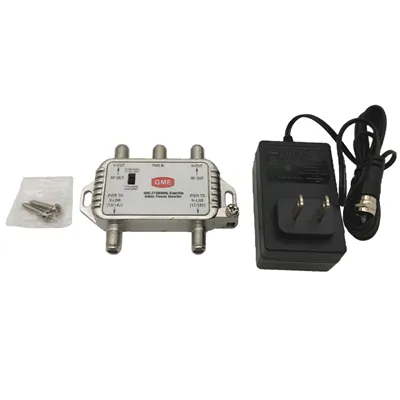
Now, let's talk about how our products come into play. As a MoCA supplier, we offer a range of high - quality products that can support the use of MoCA in healthcare settings. Our 8 Way MOCA Amplifier is a great option for facilities that need to expand their MoCA network. It allows multiple devices to be connected, ensuring that the test results can be transmitted and stored efficiently.
Our MoCA 2.5 Adapter is another fantastic product. It provides a reliable and fast connection, which is crucial when dealing with important medical data. This adapter can help ensure that the MoCA test results are accurately transferred from the testing device to the patient's medical record system.
And for those who need a more moderate expansion, our 4 Way MOCA Amplifier is a great choice. It offers a good balance between functionality and cost - effectiveness.
If you're in the healthcare industry and are interested in using MoCA for monitoring cognitive decline, our products can be a valuable addition to your toolkit. Whether you're a small clinic or a large hospital, we have solutions that can meet your needs.
If you're thinking about purchasing our MoCA - related products, we'd love to have a chat with you. We can discuss your specific requirements, answer any questions you might have, and help you find the best products for your situation. Just reach out to us, and we'll get the ball rolling on a great partnership.
In conclusion, while MoCA has its limitations, it can definitely be a useful tool for monitoring the progression of cognitive decline. And with our top - notch products, you can make the most of this valuable assessment tool. So, don't hesitate to get in touch if you're interested in learning more or making a purchase.
References
- Nasreddine, Z. S., Phillips, N. A., Bédirian, V., Charbonneau, S., Whitehead, V., Collin, I., ... & Chertkow, H. (2005). The Montreal Cognitive Assessment, MoCA: A brief screening tool for mild cognitive impairment. Journal of the American Geriatrics Society, 53(4), 695 - 699.
- Petersen, R. C., Smith, G. E., Waring, S. C., Ivnik, R. J., Tangalos, E. G., & Kokmen, E. (1999). Mild cognitive impairment: Clinical characterization and outcome. Archives of Neurology, 56(3), 303 - 308.