As a supplier of MoCA (Multimedia over Coax Alliance) products, I often get asked a wide range of questions about the applications and limitations of our tech. One query that's been popping up more frequently lately is whether the MoCA test can be used for people with hearing impairments. Let's dig into this topic and see what we can find out.
First off, let's understand what the MoCA test is all about. The Montreal Cognitive Assessment (MoCA) is a widely - used tool to screen for mild cognitive impairment (MCI) and early dementia. It assesses various cognitive domains like attention, concentration, executive functions, memory, language, visuospatial skills, and orientation. The test usually takes about 10 - 12 minutes to complete and involves tasks such as naming animals, repeating words, and drawing a clock.
Now, when it comes to people with hearing impairments, there are some obvious challenges in administering the MoCA test. The standard MoCA test is primarily verbal. The examiner reads out instructions and questions, and the participant is expected to respond verbally. For someone with a hearing impairment, this can be a major roadblock. If they can't hear the questions clearly, they won't be able to provide accurate answers, which can lead to an inaccurate assessment of their cognitive abilities.

But that doesn't mean the MoCA test can't be used at all for this group. There are ways to adapt the test to make it more accessible. One option is to use sign language interpreters. If the person with a hearing impairment is fluent in sign language, having an interpreter present can ensure that the instructions and questions are accurately conveyed. The interpreter can also translate the participant's signed responses back to the examiner. This way, the integrity of the test can be maintained as much as possible.
Another approach is to use written instructions. Instead of relying solely on verbal communication, the examiner can provide the questions and instructions in writing. This can be done on a piece of paper or using a digital device. However, there are some caveats with this method. Some people with hearing impairments may have difficulty reading, especially if they have a learning disability or if their hearing loss has affected their language development. Also, some tasks in the MoCA test, like repeating words or sentences, may be more difficult to assess when using written instructions.
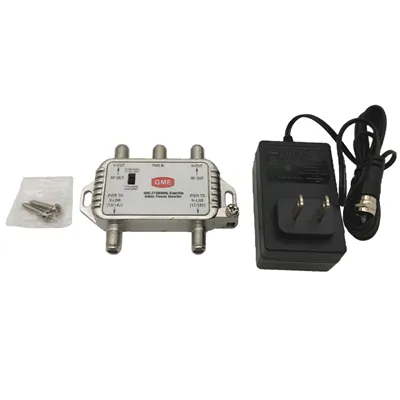
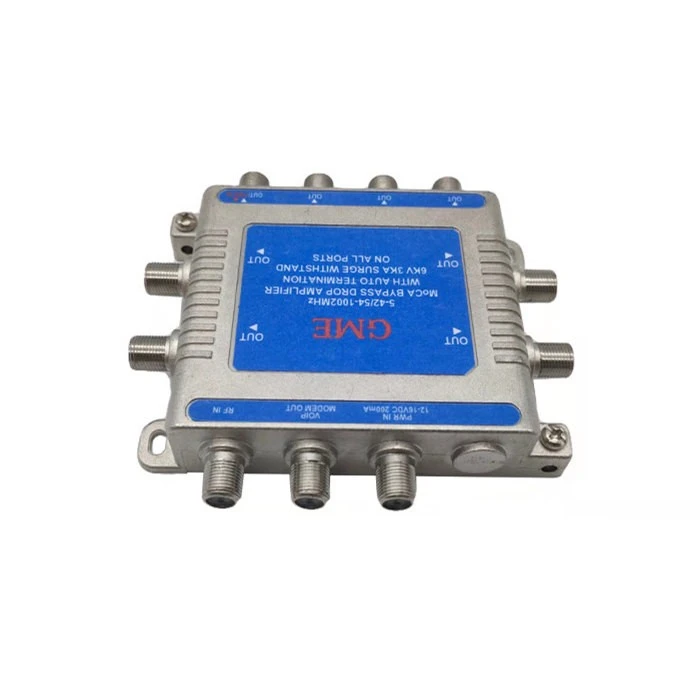
Let's talk a bit about our MoCA - related products. We offer a range of high - quality adapters and amplifiers that can enhance the performance of MoCA networks. For example, our 8 Way MOCA Amplifier is great for large - scale installations where you need to split the MoCA signal across multiple devices. It ensures that the signal strength remains strong, so you don't have any drop - outs or interference.
Our MoCA 2.5 Adapter is another popular product. It provides high - speed data transfer over coaxial cables, which is essential for modern home networks. Whether you're streaming high - definition videos or playing online games, this adapter can handle the load with ease. And if you have a smaller setup, our 4 Way MOCA Amplifier might be the perfect fit. It's compact and efficient, making it ideal for home offices or small apartments.
Now, back to the MoCA test for people with hearing impairments. We also need to consider the cultural and social factors. People with hearing impairments often have their own unique culture and way of communicating. The examiner needs to be sensitive to these aspects and approach the test in a way that respects their culture. For example, some deaf communities may have different norms regarding eye contact, body language, and social interactions. Understanding these norms can help build a better rapport with the participant and make the testing process more comfortable for them.
There's also the issue of test validity. When we adapt the MoCA test for people with hearing impairments, we need to ensure that the test still measures what it's supposed to measure. Just because we've made some changes to the administration method doesn't mean the results will accurately reflect the person's cognitive abilities. Researchers are still working on validating these adapted versions of the MoCA test to make sure they are reliable.
In some cases, it might be necessary to use additional assessment tools in conjunction with the MoCA test. For example, non - verbal cognitive tests can be used to complement the MoCA. These tests rely on visual stimuli and motor responses, which can be more accessible for people with hearing impairments. This multi - modal approach can provide a more comprehensive assessment of their cognitive function.
So, can the MoCA test be used for people with hearing impairments? The answer is yes, but with some modifications. It's not a one - size - fits - all solution, and we need to be creative and flexible in how we administer the test. By using sign language interpreters, written instructions, and being aware of cultural factors, we can make the MoCA test more accessible to this group.
If you're interested in our MoCA products, whether it's for enhancing your home network or for a professional installation, we're here to help. We have a team of experts who can provide you with all the information you need and guide you through the purchasing process. Feel free to reach out to us to start a conversation about your specific requirements.
References
- Nasreddine, Z. S., Phillips, N. A., Bédirian, V., Charbonneau, S., Whitehead, V., Collin, I., ... & Chertkow, H. (2005). The Montreal Cognitive Assessment, MoCA: a brief screening tool for mild cognitive impairment. Annals of internal medicine, 143(4), 296 - 301.
- American Speech - Language - Hearing Association. (n.d.). Working with Interpreters for People Who Are Deaf or Hard of Hearing.
- World Health Organization. (2021). Deafness and hearing loss.