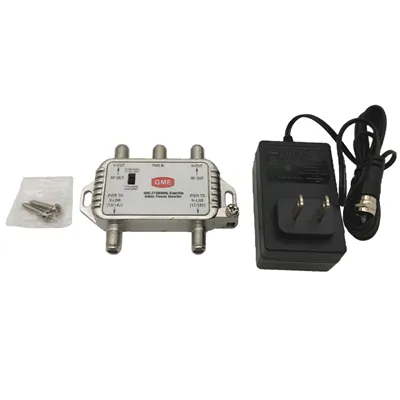
In the realm of cognitive assessment, the tools available to professionals play a crucial role in accurately evaluating an individual's cognitive function. Among these, the Montreal Cognitive Assessment (MoCA) has emerged as a prominent instrument, renowned for its efficiency and sensitivity in detecting mild cognitive impairment. As a proud supplier of MoCA-related products, including the 8 Way MOCA Amplifier, MoCA 2.5Gigabit Adapter, and Return Path Filter, I am well-positioned to discuss how MoCA compares to other cognitive assessment tools.
Sensitivity and Specificity
One of the key strengths of MoCA is its high sensitivity in detecting mild cognitive impairment (MCI). MCI is a transitional state between the normal cognitive changes of aging and more severe forms of dementia, such as Alzheimer's disease. Early detection of MCI is crucial for implementing timely interventions and treatment strategies to slow down or prevent further cognitive decline.
Several studies have demonstrated that MoCA has a significantly higher sensitivity for detecting MCI compared to other widely used cognitive assessment tools, such as the Mini - Mental State Examination (MMSE). For example, a meta - analysis of multiple studies found that MoCA had a sensitivity of approximately 90% in detecting MCI, while MMSE had a sensitivity of around 60%. This indicates that MoCA is more likely to correctly identify individuals with MCI, allowing for earlier diagnosis and intervention.
On the other hand, the specificity of MoCA, which refers to its ability to correctly identify individuals without cognitive impairment, is also reasonable. While no cognitive assessment tool is perfect, MoCA's balance between sensitivity and specificity makes it a valuable asset in clinical and research settings.
Range of Cognitive Domains Assessed
MoCA assesses a broader range of cognitive domains compared to many other cognitive assessment tools. It evaluates not only basic cognitive functions such as orientation, memory, and attention but also more complex functions like executive function, language, and visuospatial abilities.
Executive function is particularly important as it involves a set of higher - order cognitive skills that allow individuals to plan, organize, solve problems, and adapt to new situations. Impairment in executive function can have a significant impact on daily functioning. By including assessments of executive function, MoCA provides a more comprehensive picture of an individual's cognitive health.
In contrast, some other cognitive assessment tools may focus more narrowly on basic cognitive functions. For instance, the Clock Drawing Test primarily assesses visuospatial and executive function but does not cover other important domains like memory or language to the same extent as MoCA.
User - Friendliness and Administration Time
Another advantage of MoCA is its relative user - friendliness and reasonable administration time. MoCA typically takes about 10 - 12 minutes to administer, which is shorter than some other comprehensive cognitive assessment batteries. This makes it more practical for use in busy clinical settings, where time is often limited.
The test is also relatively straightforward to administer, requiring minimal training for healthcare professionals. The scoring system is clear and objective, which helps to ensure consistency in results across different examiners.
In comparison, some comprehensive neuropsychological test batteries can take several hours to administer and require extensive training for the examiners. While these tests may provide a very detailed assessment of cognitive function, their length and complexity can make them less suitable for routine screening in primary care or community settings.
Cultural and Linguistic Considerations
MoCA has been translated into multiple languages and has been shown to be relatively culturally fair. This means that it can be used effectively in diverse populations without being overly influenced by cultural or linguistic factors.
The developers of MoCA have made efforts to ensure that the test items are relevant and understandable across different cultures. For example, the memory and attention tasks are designed to be based on universal concepts rather than culture - specific knowledge. This makes MoCA a more inclusive and accessible cognitive assessment tool compared to some others that may be more biased towards certain cultural or linguistic groups.


Limitations and Comparison to Other Tools
Despite its many advantages, MoCA also has some limitations. One of the main limitations is that it may be less sensitive in detecting severe cognitive impairment. In individuals with advanced dementia, the test may not provide as much detailed information as more comprehensive neuropsychological assessments.
For example, the Wechsler Adult Intelligence Scale (WAIS) is a highly detailed and comprehensive assessment of cognitive function that can provide in - depth information about all aspects of intelligence, including cognitive processing speed, working memory, and fluid reasoning. In cases where a detailed understanding of an individual's cognitive profile is required, especially in patients with severe cognitive decline, the WAIS may be more appropriate than MoCA.
Another aspect to consider is the cost. While the cost of administering MoCA is relatively low, some other cognitive assessment tools may be more cost - effective in certain situations. For example, the MMSE is a very simple and inexpensive tool that can be used as a quick screening test in large - scale population studies. In such cases, where a large number of individuals need to be screened, the lower cost of the MMSE may be a significant advantage.
Conclusion
In conclusion, MoCA is a valuable and versatile cognitive assessment tool with many advantages over other tools. Its high sensitivity for detecting mild cognitive impairment, broad coverage of cognitive domains, user - friendliness, and cultural inclusiveness make it an excellent choice for routine screening and assessment in clinical and research settings.
However, like any tool, it has its limitations, and in some cases, other cognitive assessment tools may be more appropriate. Healthcare professionals need to carefully consider the specific needs of the individual being assessed, the purpose of the assessment, and the available resources when choosing a cognitive assessment tool.
As a supplier of MoCA - related products, we are committed to providing high - quality solutions to support accurate cognitive assessment. Our 8 Way MOCA Amplifier, MoCA 2.5Gigabit Adapter, and Return Path Filter are designed to enhance the performance and reliability of MoCA - based systems.
If you are interested in learning more about our products or exploring how MoCA can be integrated into your cognitive assessment practice, we invite you to contact us for a detailed discussion. Our team of experts is ready to assist you in finding the best solutions for your needs.
References
- Nasreddine, Z. S., Phillips, N. A., Bédirian, V., Charbonneau, S., Whitehead, V., Collin, I., ... & Chételat, G. (2005). The Montreal Cognitive Assessment, MoCA: A brief screening tool for mild cognitive impairment. Journal of the American Geriatrics Society, 53(4), 695 - 699.
- Mitchell, A. J. (2009). A meta - analysis of the sensitivity and specificity of the Mini - Mental State Examination and the Montreal Cognitive Assessment for detecting mild cognitive impairment and Alzheimer's disease. International Journal of Geriatric Psychiatry, 24(11), 1117 - 1128.
- Strauss, E., Sherman, E. M. S., & Spreen, O. (2006). A compendium of neuropsychological tests: Administration, norms, and commentary. Oxford University Press.