The Montreal Cognitive Assessment (MoCA) is a widely used screening tool designed to detect mild cognitive impairment (MCI) and early stages of dementia. As a supplier of MoCA - related products, I am often asked about the maximum score on the MoCA test. In this blog, I will delve into this topic, explain what the maximum score means, and also briefly introduce our relevant MoCA - compatible products.
Understanding the MoCA Test
The MoCA test was developed by Dr. Ziad Nasreddine and colleagues to quickly and effectively assess cognitive function. It evaluates multiple cognitive domains, including attention and concentration, executive functions, memory, language, visuospatial skills, conceptual thinking, calculations, and orientation. The test takes approximately 10 - 15 minutes to administer and is a valuable tool in both clinical and research settings.
What is the Maximum Score on the MoCA Test?
The maximum score on the MoCA test is 30 points. A score of 26 or above is generally considered normal cognitive function. However, it's important to note that the interpretation of MoCA scores is not absolute and should be considered in the context of other factors such as the individual's education level, cultural background, and presence of comorbidities.
For example, individuals with lower levels of education may score slightly lower on the test, even if they have normal cognitive function. In such cases, additional clinical evaluation may be necessary to make an accurate diagnosis.
Components of the MoCA Test and Their Scoring
Let's break down the different components of the MoCA test and how they contribute to the overall score:
- Visuospatial/Executive Functions (5 points): This section assesses skills such as clock drawing, cube copying, and trail - making. For instance, a perfect clock - drawing task, where the clock shows the correct time, has all the numbers in the right place, and the hands are drawn accurately, will earn the full score.
- Naming (3 points): The test - taker is asked to name three animals (a lion, a rhinoceros, and a camel). Each correct answer is worth one point.
- Memory (6 points): Five words are presented, and the individual is asked to recall them immediately and then after a short delay. The score is based on the number of words correctly recalled.
- Attention (5 points): This includes tasks like digit span (forward and backward), serial 7s subtraction, and vigilance tasks. For example, accurately performing serial 7s subtraction from 100 (93, 86, 79, etc.) will contribute to the score.
- Language (3 points): The test assesses language skills through tasks such as sentence repetition and fluency. For example, repeating a complex sentence without errors will earn a point.
- Abstraction (2 points): The individual is asked to explain the similarity between two concepts (e.g., a train and a bicycle). A well - reasoned answer will earn a full point.
- Delayed Recall (5 points): This is a repeat of the memory recall task after a few minutes, testing long - term memory.
- Orientation (3 points): The test - taker is asked to state the date, day of the week, month, year, and place. Each correct answer is worth one point.
The Significance of the Maximum Score
A score of 30 on the MoCA test indicates excellent cognitive function across all the domains assessed. It suggests that the individual has intact attention, memory, language, and visuospatial skills, as well as good executive functions. However, it's important to remember that a single test score does not provide a comprehensive picture of an individual's cognitive health.
In some cases, individuals with a score of 30 may still be at risk of developing cognitive impairment in the future, especially if they have other risk factors such as a family history of dementia, cardiovascular disease, or a sedentary lifestyle. Regular cognitive screening and lifestyle modifications are recommended for overall cognitive health.
Our MoCA - Compatible Products
As a MoCA supplier, we offer a range of products that can enhance the MoCA testing experience and improve the accuracy of results.


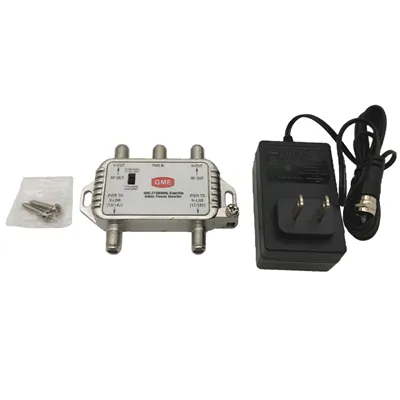
Our 4 Way MOCA Amplifier is designed to boost the signal strength in a multi - device MoCA network. This is particularly useful in larger healthcare facilities or research centers where multiple MoCA - enabled devices may be in use simultaneously. It ensures stable and reliable communication between devices, which is crucial for accurate data collection during the MoCA test.
The 8 Way MOCA Amplifier is ideal for even larger setups. It can handle a higher number of devices, making it suitable for large - scale clinical trials or hospitals with a high volume of patients undergoing cognitive testing.
Our MoCA 2.5 Adapter is a state - of - the - art device that provides high - speed data transfer capabilities. It is backward - compatible with previous MoCA versions, ensuring seamless integration with existing systems. This adapter can significantly improve the efficiency of data transmission from MoCA - enabled testing devices to data storage and analysis platforms.
Contact Us for Procurement
If you are interested in purchasing our MoCA - related products, we encourage you to reach out to us for a detailed discussion. Our team of experts is ready to provide you with all the necessary information, including product specifications, pricing, and installation support. Whether you are a small private clinic or a large research institution, we have the right solutions to meet your needs.
References
- Nasreddine, Z. S., Phillips, N. A., Bédirian, V., Charbonneau, S., Whitehead, V., Collin, I., ... & Chertkow, H. (2005). The Montreal Cognitive Assessment, MoCA: A brief screening tool for mild cognitive impairment. Journal of the American Geriatrics Society, 53(4), 695 - 699.
- Stern, Y., Albert, M. S., Knopman, D., Amieva, H., Gaubert, M., & Scarmeas, N. (2018). The diagnosis of mild cognitive impairment due to Alzheimer's disease: Recommendations from the National Institute on Aging and Alzheimer's Association workgroups on diagnostic guidelines for Alzheimer's disease. Alzheimer's & Dementia, 14(5), 535 - 546.